Injury Prevention
Runner's Knee: What It Is and How to Fix It
Runner's knee (patellofemoral pain) explained: symptoms, causes, and a practical fix-it plan with exercises to get you back on the road.
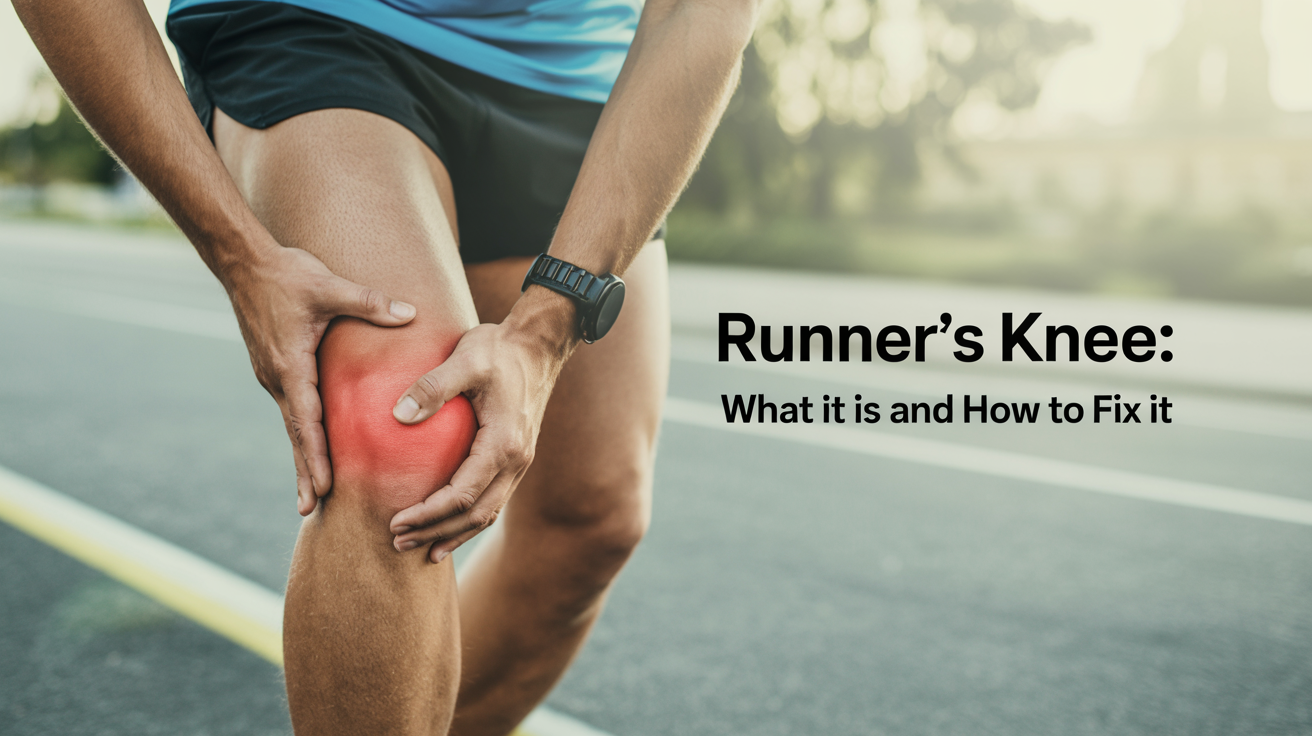
If you've felt a dull, grinding ache around the front of your knee after a long run, you're not imagining things. That sensation has a name: patellofemoral pain syndrome, or what most runners simply call runner's knee. It's one of the most common complaints in the sport, and the good news is that most people resolve it with rest, a bit of targeted strengthening, and some patience.
This article is general information, not medical advice. If your knee swells, locks, gives way, feels unstable, or the pain doesn't improve over a couple of weeks, see a doctor or physiotherapist. A real diagnosis matters.
At a Glance
- Runner's knee is an ache around or behind the kneecap, usually gradual in onset, often worse on stairs or after sitting a long time.
- The most common trigger is a sudden jump in mileage before your tissues have adapted, not a single bad step.
- Weak hips and glutes are frequently the real driver; strengthening them outperforms knee-only exercises in clinical research.
- Back off mileage and ice the area for the first one to two weeks rather than pushing through the ache.
- Most mild cases improve in two to four weeks of consistent hip and glute strengthening.
- See a healthcare provider if the knee swells, locks, gives way, or pain hasn't eased after a few weeks.
What Does Runner's Knee Feel Like?
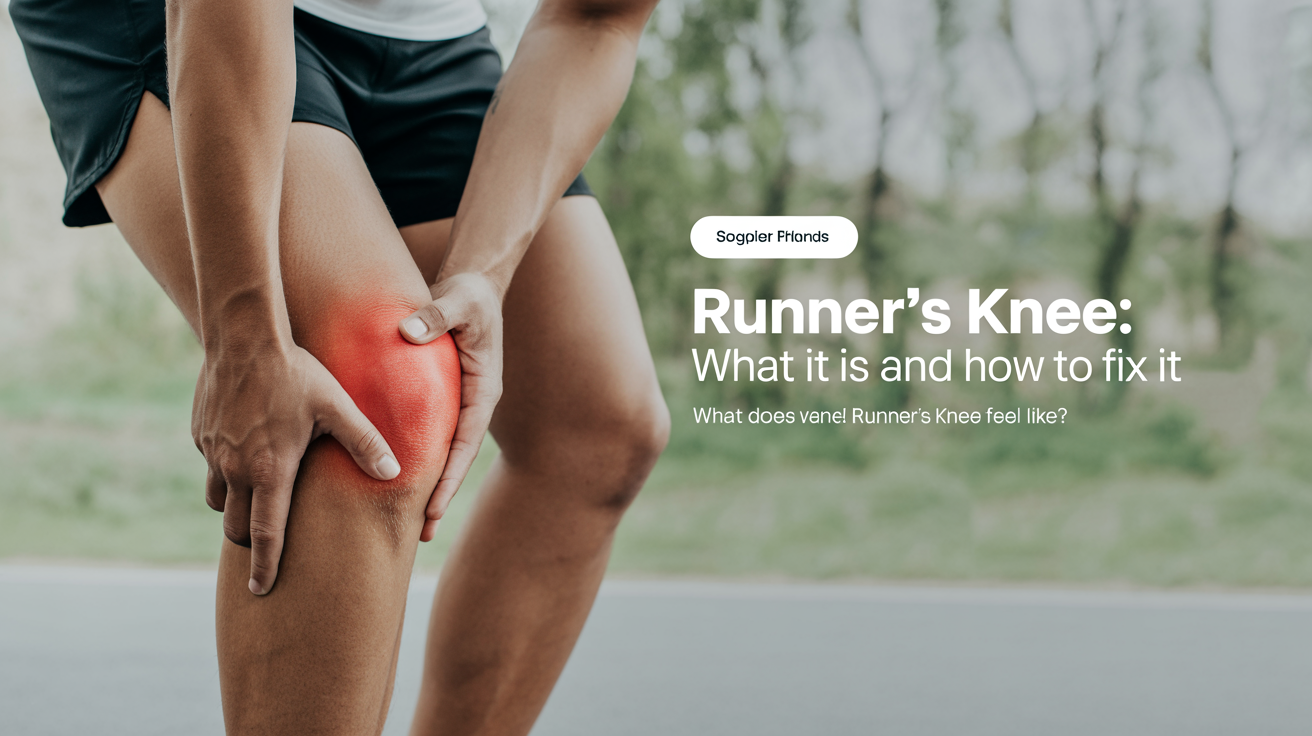
The pain sits around or directly behind the kneecap. It's often described as a dull ache that flares up during or after a run, when you go down stairs, squat, or sit with your knee bent for a long stretch (the classic "movie-goer's sign"). Some people feel a subtle grinding sensation. Others notice tenderness if they press around the edges of the kneecap.
The pain is typically gradual in onset rather than sharp and sudden. If you heard a pop or your knee swelled immediately after a fall, that's a different problem and you need a healthcare provider sooner rather than later.
Runner's knee also has close relatives that feel similar but aren't the same injury. The table below is a rough first-pass guide, not a diagnosis, to help you understand what you might be dealing with before you see a professional.
| Condition | Where It Hurts | Feels Worse When | First Step |
|---|---|---|---|
| Runner's knee (patellofemoral pain) | Around or behind the kneecap | Stairs, squats, sitting with knee bent | Relative rest + hip/glute strengthening |
| IT band syndrome | Outside of the knee | Downhill running, repetitive knee bending at a fixed angle | Relative rest + hip strengthening, foam rolling the outer thigh |
| Patellar tendinopathy ("jumper's knee") | Just below the kneecap, on the tendon itself | Jumping, sprinting, deep squats under load | Relative rest + slow, loaded tendon exercises |
Why Does It Happen?
Runner's knee rarely has a single cause. It's usually a combination of factors that add up over time. Overuse injuries in runners typically develop gradually rather than from one bad run, and ramping up training intensity too quickly is one of the most consistently cited risk factors in NIH-reviewed research on sports injuries.
Too much, too soon. The most common culprit. Your body is remarkably adaptable, but it needs time to catch up to new demands. A beginner who jumps from short jogs to 30-minute runs in a week, or anyone who suddenly spikes mileage, overloads the cartilage and soft tissues around the kneecap before they've had a chance to strengthen and adjust. Knowing how to prevent running injuries as a beginner comes down largely to respecting this adaptation window.
Weak hips and glutes. This one surprises a lot of new runners. The muscles at the back and side of your hip (glutes, hip abductors) help control how your femur tracks beneath the kneecap. When they're underpowered, your thigh rotates inward with each stride, which shifts stress onto the patellofemoral joint. Quad weakness plays a role too, since the quads help stabilize the kneecap as you land and push off.
Running form. Overstriding (landing too far ahead of your center of mass) and excessive inward knee collapse (valgus) both put more force through the kneecap than it needs to handle. You don't need to obsess over your form, but these patterns are worth noticing.
Worn-down shoes. Running shoes lose their cushioning gradually. A pair that looks fine on the outside may have midsole foam that's compressed and past its prime, typically around 300 to 500 miles depending on the shoe. Old shoes change how forces travel through your foot, ankle, and knee.
What to Do First: Short-Term Self-Care
The first step when knee pain from running appears is to back off, not push through. Running on inflamed tissue does not toughen it up; it just makes recovery longer.
Reduce your mileage or take a few days off. "Relative rest" means cutting back, not necessarily stopping completely. Easy walking is usually fine. Swimming and cycling are good options to stay active while keeping load off the knee.
Ice it. After activity, apply an ice pack wrapped in a cloth (never directly on skin) to the front of the knee for 15 to 20 minutes, up to two or three times a day in the first few days. It won't cure the underlying issue, but it can ease inflammation and make you more comfortable while you recover.
Modify, don't eliminate. Avoid deep squats, stairs, and long downhill runs for now. Flat surfaces and shorter efforts are your temporary friend. Running through sharp pain is always a signal to stop.
Check your shoes. Track your mileage. If you're over 400 miles on your current pair, they may be contributing.
The Real Fix: Strengthen Your Hips and Glutes
Here's the part most beginner runners skip: runner's knee is often a hip and glute problem wearing a knee costume. A 2018 systematic review and meta-analysis covering 14 trials and 673 people with patellofemoral pain found that combining hip and knee strengthening reduced pain and improved function more than knee-only strengthening did, which is exactly why the exercises below focus on the hip and glutes rather than the knee itself.
You don't need a gym. These exercises can be done at home, three times a week, on your rest days from running.
Clamshells. Lie on your side with knees bent at 90 degrees, feet together. Keep your pelvis still and rotate your top knee upward like a clamshell opening. Lower slowly. Three sets of 15 reps per side.
Glute bridges. Lie on your back, feet flat on the floor, knees bent. Drive through your heels and lift your hips until your body forms a straight line from knees to shoulders. Squeeze at the top. Three sets of 15 reps. Single-leg bridges are a good progression once this feels easy.
Side-lying leg raises. Lie on your side, bottom knee slightly bent for stability. Raise your top leg to about 45 degrees, toes pointed slightly down. Lower slowly. Three sets of 15 reps per side.
Step-downs. Stand on a low step (a stair works). Slowly lower your opposite heel toward the floor, bending your standing knee while keeping it tracking over your second toe. The movement should be controlled, not a drop. Three sets of 10 reps per side. This one also builds quad control.
Wall sits. Slide your back down a wall until your thighs are roughly parallel to the floor. Hold for 30 to 45 seconds. Three rounds. Simple and effective for building quad endurance without high-impact load.
It takes time. Most people start noticing improvement in two to four weeks of consistent strengthening. Don't stop once it feels better, that's when maintaining the habit matters most.
Coming Back to Running
When the sharp pain is gone and the ache has settled to a mild discomfort (or nothing), you can start reintroducing running. Do it gradually. General exercise guidance backs this up directly: the advice to build up your activity level slowly rather than jumping back to full volume applies just as much to returning from an injury as it does to starting from zero.
Start with a run-walk approach. Something like five minutes of running, two minutes of walking, for 20 to 25 minutes total. If that goes well with no knee pain during or after, increase the running intervals the following week. Add no more than 10 percent to your total weekly mileage at a time.
Pay attention to the 24-hour window after a run. Some mild muscle soreness is normal. But if your knee aches the next morning or hurts going down stairs, you went too far too fast. Pull back a step and hold there for another week before progressing. As a rough decision rule: two consecutive pain-free run-walk sessions before you increase the running portion, one aggravated session means you hold at the current level for another week rather than pushing forward.
This gradual return is similar to what applies after shin splints. Your body needs time to adapt, not just for muscles but for tendons, cartilage, and bone too.
Preventing Runner's Knee from Coming Back
Once you're back to full training, a few habits will help keep runner's knee from showing up again.
Don't abandon the hip work. Keep doing two sets of clamshells and bridges a couple of times a week. Think of it as maintenance, not treatment.
Build mileage slowly. The 10 percent rule isn't a rigid law, but the principle holds: sudden increases in volume are the single biggest predictor of overuse injury.
Replace shoes on time. Track your mileage and replace around 400 to 500 miles, or earlier if the midsole feels dead underfoot.
Warm up before hard efforts. A five-minute easy walk before picking up the pace lets the joints warm up and prepares your muscles to do their job properly.
Address any chafing or discomfort before it becomes a distraction. Minor irritations become bigger problems when you compensate for them in your stride. Take a look at how to prevent blisters and chafing while running so you're not changing how you move to avoid discomfort.
Frequently Asked Questions
How long does runner's knee take to heal?
It varies a lot. Mild cases with a clear cause (a mileage spike, for example) often resolve in two to four weeks with rest and strengthening. More persistent cases can take six to eight weeks or longer, especially if you keep running through the pain. Consistency with the hip work and patience with the return-to-run process are the two biggest factors in your timeline.
Can I still run with runner's knee?
It depends on how much it hurts. Mild discomfort that doesn't get worse during a run and settles down within an hour afterward is often manageable with a reduced load. Sharp, worsening, or post-run pain that lingers suggests your knee needs more rest before you run again. When in doubt, a physio can help you figure out where you sit on that spectrum.
Is runner's knee the same as IT band syndrome?
No. They're both overuse knee injuries common in runners, but they affect different structures. Runner's knee (patellofemoral pain) involves the kneecap and the tissue beneath it. IT band syndrome causes pain on the outside of the knee where the iliotibial band rubs against the lateral femoral condyle. The treatment approaches overlap somewhat (both benefit from hip strengthening) but they're distinct problems, see the comparison table above for the quick difference.
Do I need to see a doctor for runner's knee?
Not always. Mild cases often improve with the self-care and strengthening steps above. But you should see a healthcare provider if your knee swells, locks, gives way, feels unstable, or if the pain is severe, worsening, or hasn't improved after a few weeks of sensible management. This article is general information and not a substitute for a proper clinical assessment.
Will I always be prone to runner's knee?
Not necessarily. Many runners who've had it once go years without a recurrence, especially once they build up hip and glute strength and learn to manage their mileage increases. The work you put in during recovery often makes you a more resilient runner going forward.
Do new running shoes fix runner's knee on their own?
Rarely by themselves. Worn-out shoes can be a contributing factor, so replacing a pair that's well past 400 to 500 miles is worth doing. But if your hips and glutes are still weak and your mileage is still climbing too fast, new shoes alone won't resolve the underlying pattern. Treat them as one piece of the fix, not the whole plan.