Injury Prevention
How to Prevent Blisters and Chafing While Running
Stop blisters and chafing before they stop your run. Practical tips on socks, shoes, anti-chafe balm, and safe blister treatment.
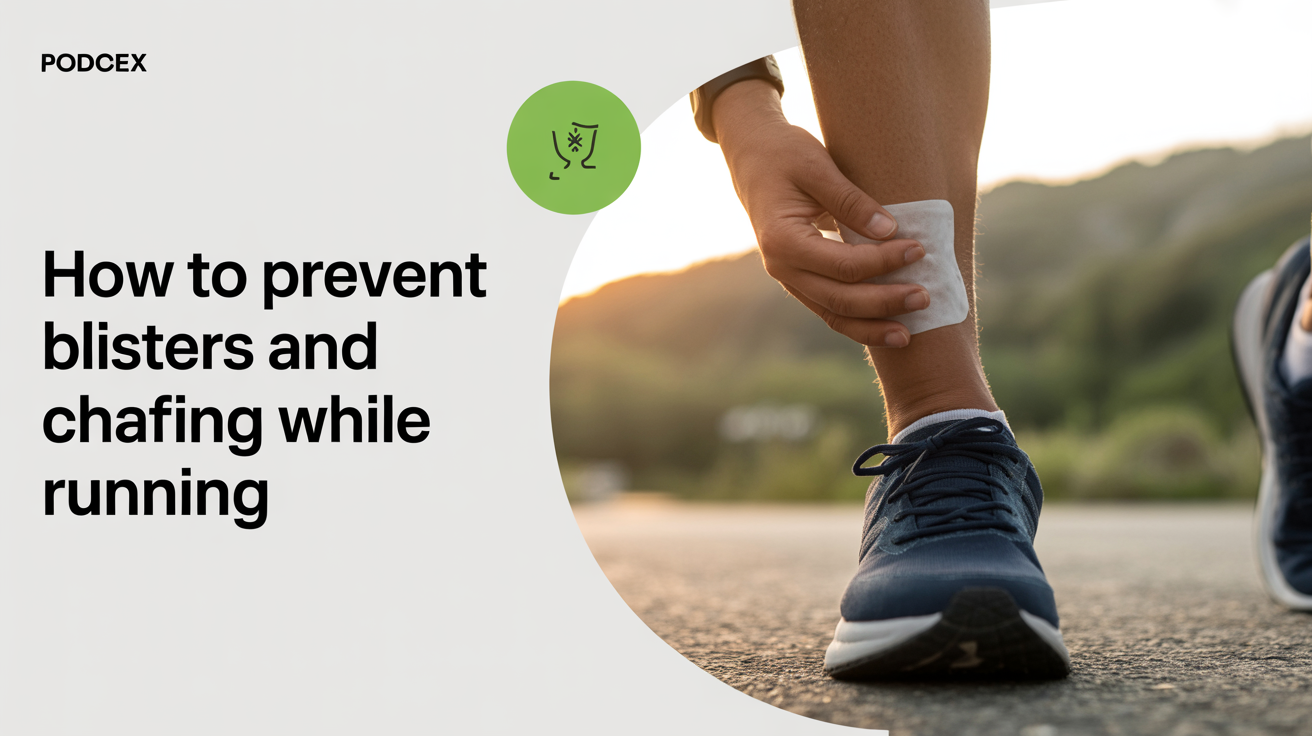
Blisters and chafing have ended more training runs than tired legs ever have. The good news is that both are friction problems, and friction problems have straightforward fixes. Once you understand why skin breaks down on a run, you can stop it before it starts, and finish every mile feeling good instead of limping to the car.
Why Blisters Form During Running
A blister is your skin's protest against repeated rubbing in one spot. The outer layers separate, fluid fills the gap, and you end up with a painful bubble that makes every step feel worse than the last.
Three things turn ordinary friction into a blister:
Moisture. Sweat softens skin, and soft skin tears faster. Wet socks are the most common setup for a bad blister day.
Heat. Friction generates heat. Hot spots, that burning sensation you feel before a blister fully forms, are your warning sign that something needs to change right now.
Poor fit. A shoe that is too loose lets your foot slide forward and sideways with each stride. Too tight and the upper presses into the same patch of skin thousands of times. Either way, your skin loses.
Knowing the cause makes the prevention obvious. You want dry skin, reduced friction, and a shoe that holds your foot without squeezing it.
How to Prevent Running Blisters
Get the shoe fit right
This is the single biggest lever. Have your feet measured at a running specialty store, not a department store kiosk, where staff watch you walk or jog. Most runners need a thumb's width of space between their longest toe and the end of the shoe. If your foot slides at the heel, the front will compensate by gripping the upper and blisters follow.
Replace shoes before they're completely worn out. When the midsole compresses, the upper gets sloppy. Most shoes last 300 to 500 miles, but feel the fit at every shoe change.
Choose the right socks
Cotton is the enemy. It absorbs sweat, stays wet, and clings to your foot. Switch to moisture-wicking materials like merino wool or synthetic blends designed for running. These pull moisture away from skin and dry quickly.
Double-layer socks (brands like Wrightsock and Drymax make them) are worth trying if you blister often. The two layers slide against each other instead of against your skin, which dramatically cuts friction on long runs.
Adjust your lacing
The way you lace your shoes matters more than most people realize. If your heel slips, use a lace lock: thread the lace through the top eyelet loop on the same side before crossing, creating a small loop, then lace through both loops before tying. It anchors the heel and stops that backward slide that grinds the Achilles area raw.
Apply anti-blister balm before you run
Body Glide, Trail Toes, Squirrel's Nut Butter, Vaseline, they all work on the same principle. A thin coat on blister-prone spots (heels, toes, the ball of the foot) creates a slippery barrier that friction can't grip. Apply it before you put your socks on. Reapply on runs longer than an hour.
Common Chafing Spots and Why They Happen
Chafing is skin rubbing against skin or fabric, usually in a repetitive rhythmic motion, which makes running a prime setup for it. The affected skin turns red, raw, and sometimes bleeds. Salt from dried sweat makes it sting sharply in the shower.
The spots runners deal with most:
- Inner thighs, especially when wearing shorts with loose legs or when running in humid conditions
- Underarms, where arms swing against the torso or shirt seams
- Nipples, men are particularly vulnerable; the shirt drags across the same spot thousands of times per mile
- Bra lines and waistbands, elastic edges that ride up and down with each stride
Longer distances mean more repetitions and more sweat, so chafing tends to show up first on your longest runs of the week.
How to Prevent Chafing While Running
Use an anti-chafe balm on every run
Body Glide and similar products are as essential for preventing chafing while running as good socks are for preventing blisters. Apply generously to your inner thighs, underarms, and anywhere a seam presses against skin. For men doing longer runs, a small piece of athletic tape or a NipGuard pad over each nipple adds extra protection that balm alone sometimes can't match.
Wear fitted, seamless technical fabric
Loose shorts flap and fold against your thighs. Go for running shorts with a snug inner liner or compression shorts underneath. For the upper body, look for flatlock seams, these lie flat instead of creating a ridge, or seam-free constructions. Fitted does not mean tight; it means the fabric moves with your body rather than against it.
Cut cotton from your running wardrobe
This applies to both blisters and chafing. Cotton absorbs moisture and then drags. A soaked cotton shirt turns into sandpaper by mile three. Polyester, nylon, and merino wool all move moisture away and stay smooth.
Quick Prevention Checklist
Before every run, run through this mentally:
- Shoes fit with a thumb's width at the toe and a snug heel
- Moisture-wicking socks on, no cotton
- Anti-chafe balm on inner thighs, underarms, and any known hot spots
- Nipple protection for runs over an hour (men especially)
- No new gear on a long run, test new shoes or clothes on short runs first
That last point matters. New gear on race day or a big training run is how runners discover a problem too late to fix it.
How to Treat a Blister After a Run
Small blisters that are not painful and not under pressure from your shoe are usually best left alone. The roof of the blister protects the raw skin underneath while it heals. Keep the area clean, cover it with a bandage or blister pad, and let it resolve on its own over a few days.
If a blister is large, tense, or located somewhere your shoe will keep pressing on it, you may need to drain it. Here is how to do that safely:
- Wash your hands and the blister area with soap and water.
- Sterilize a needle with rubbing alcohol.
- Pierce the blister at its edge, not the center.
- Gently press the fluid out.
- Leave the blister roof intact, it protects the skin below.
- Apply antibiotic ointment and cover with a blister bandage.
Change the dressing daily and watch for signs of infection: spreading redness, warmth, swelling, pus, or a fever. If any of those appear, see a doctor rather than continuing to self-treat. This article is general information, not medical advice, and it is no substitute for a professional evaluation.
If you have diabetes, poor circulation, or any condition that affects wound healing, do not self-treat foot blisters. See a healthcare provider before attempting to drain or treat any blister on your foot. Infections in that context can escalate quickly.
Treating Chafed Skin
Chafed skin needs to be cleaned gently with mild soap and water, then patted dry, do not rub. Apply a gentle soothing product: aloe vera gel, a fragrance-free lotion, or a product like Aquaphor works well. Avoid anything with alcohol, which stings and dries the skin further.
Give it a day or two before your next run. When you do run again, cover the area with anti-chafe balm and consider whether a change in clothing or lube routine is in order.
Frequently Asked Questions
How do I know if my running shoes are causing my blisters?
The location of your blister is usually the clue. Blisters at the heel or little toe often point to fit issues, the shoe is either too loose (heel slipping) or too narrow (toes being compressed). Blisters under the toes can mean the shoe is too short, causing your foot to slide forward and jam the toes into the end. If you change socks and still blister in the same spot every run, the shoe is the likely culprit.
Can I run with a blister?
Sometimes, yes. A small, intact blister that is not directly under a pressure point can be padded and run on. A large, open, or painful blister that your shoe presses on directly needs a few days off, or at minimum a thick donut-shaped blister pad to offload the pressure. Forcing a run on an open blister risks infection and a longer recovery. For guidance on when running pain is a signal to stop, see how to prevent running injuries as a beginner.
Why do my thighs chafe even when I wear running shorts?
Most likely the shorts have loose legs that fold against the inner thigh with each stride, or the inner liner is not long enough. Try compression shorts or tights as a base layer, and apply anti-chafe balm before heading out. High humidity makes chafing worse because sweat accumulates faster than it evaporates.
Does running form affect blisters and chafing?
Yes, indirectly. Overstriding, landing with your foot far out in front of your body, can cause your foot to slide inside the shoe at each footstrike, increasing friction at the heel and ball of the foot. Keeping a moderate cadence and landing closer to your center of mass reduces that slide. For more on how gait contributes to wear and tear, check out shin splints: causes, treatment, and prevention.
Are expensive anti-blister socks worth it?
For many runners, yes. A quality pair of merino wool or technical running socks from brands like Darn Tough, Balega, or Feetures genuinely performs differently from a generic athletic sock. If you have tried everything else and still blister, upgrading your socks is often the fix. The cost of a few pairs is considerably less than a week off running with an infected blister. For a broader look at gear choices that protect your body over miles of training, see runner's knee: what it is and how to fix it, the same principle of prevention being cheaper than treatment applies everywhere.