Injury Prevention
IT Band Syndrome: What It Is and How to Treat It
Sharp outer knee pain when running? Learn what IT band syndrome is, why new runners get it, and how to treat it with rest, stretches, and a gradual return.
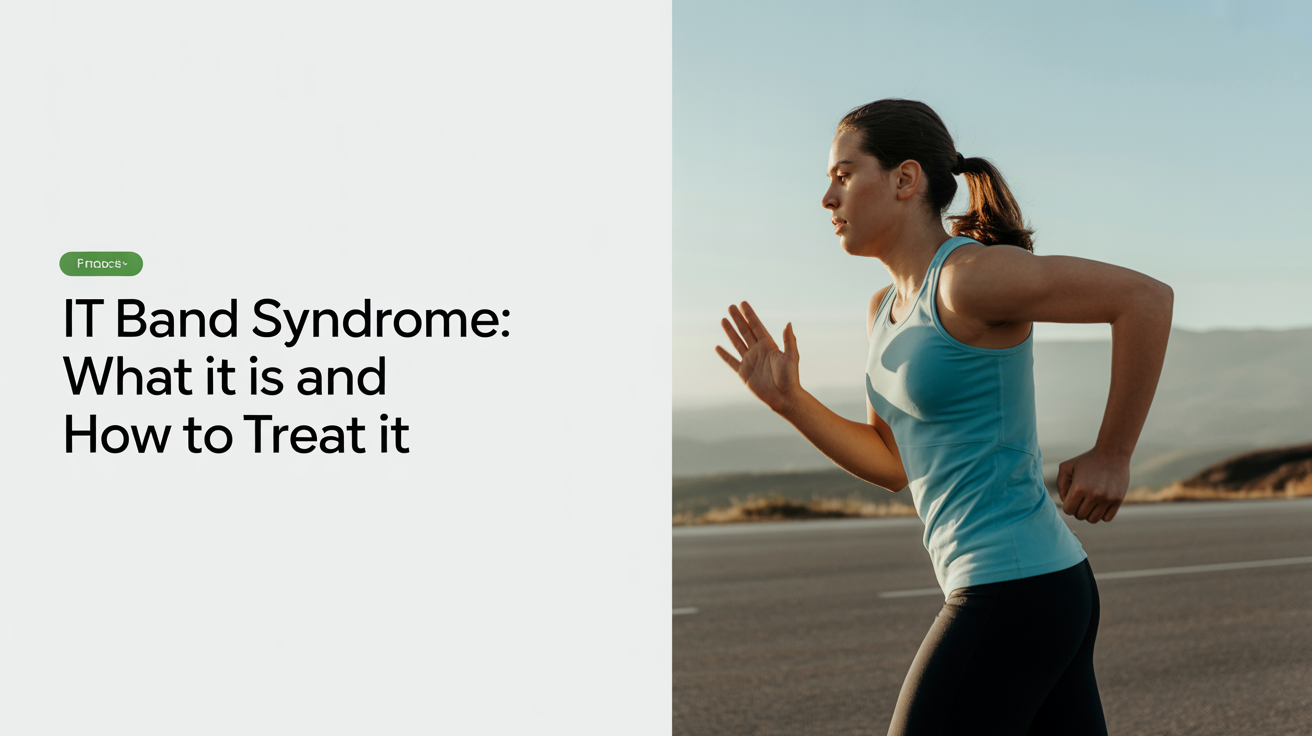
A sharp or burning ache on the outside of your knee that comes on after a mile or two and then forces you to stop is one of the most recognizable feelings in beginner running. If that description sounds familiar, you may be dealing with IT band syndrome. The good news is that it responds well to rest and a few targeted adjustments. The less-welcome news is that pushing through it tends to make it worse, not better.
This guide explains what the IT band is, why it gives new runners trouble, and what you can do about it. If your pain is severe, swollen, or does not improve with a week or two of rest, see a sports medicine doctor or physical therapist before you run again. Nothing here is medical advice, and everyone heals on a different timeline.
At a Glance
- IT band syndrome causes sharp or burning pain on the outside of the knee, usually appearing at a predictable point in a run (often 1 to 2 miles in).
- It's an overuse injury, most often triggered by too much mileage added too fast, cambered roads, downhill running, or hip and glute weakness.
- Stopping as soon as pain appears speeds recovery. Running through it tends to stretch a two-week problem into a two-month one.
- Rest, ice, and hip/glute strengthening (especially clamshells) matter more than stretching the IT band itself, which isn't very stretchy tissue.
- A gradual, run-walk return to training on flat ground is the safest way back once you've been pain-free for several days.
- Severe pain, visible swelling, or no improvement after two weeks of rest are reasons to see a sports medicine doctor or physical therapist, not push through on your own.
What Is the IT Band?

The iliotibial band is a long, thick strip of connective tissue that runs along the outside of your thigh, from your hip down to just below your knee. Its job is to stabilize the outside of the knee as your leg swings through each stride. Because it is not a muscle, it cannot lengthen the way muscles do. When it gets irritated from overuse, the area where it crosses the outside of the knee joint becomes inflamed and painful.
The pain tends to arrive at a predictable point in your run, often around the 1 to 2 mile mark (1.5 to 3 km), and can stop you cold. Some runners describe it as a burning sensation; others say it feels like a sharp pinch. It usually fades fairly quickly once you stop running, only to return at the same spot on your next outing. It's a genuinely common problem, not a sign something is unusually wrong with you: a systematic review of the running injury literature estimates IT band syndrome affects somewhere between 5 and 14 percent of runners at some point, making it one of the most frequent overuse injuries in the sport.
Why New Runners Are Vulnerable
IT band syndrome is an overuse injury, which means it shows up when your body takes on more load than it has adapted to handle. New runners are especially susceptible for a handful of reasons.
Too much, too fast. The most common trigger is ramping up mileage faster than the body can adapt. If you went from walking to running several miles a week within a short stretch, your connective tissue did not have enough time to catch up. Increasing training intensity or volume too quickly is one of the risk factors the National Institute of Arthritis and Musculoskeletal and Skin Diseases flags most often across all overuse sports injuries, not just running. The 10% rule exists for exactly this reason: try not to increase your total weekly distance by more than 10% from one week to the next. So if you ran 10 miles (16 km) this week, aim for no more than 11 miles (about 18 km) next week.
Running surface and terrain. Consistently running on a cambered road surface (where the road slopes toward the gutter) can cause your outside foot to land on a slight downward angle, which puts extra stress on the IT band with every stride. The same goes for repeated downhill running, which loads the knee in a way that is disproportionately hard on the iliotibial band.
Hip and glute weakness. When the muscles around the hip are not strong enough to control the leg through each stride, the knee tends to drop inward on landing. This subtle movement creates a repetitive friction point where the IT band crosses the knee.
Running gait. A long, overstriding gait where your foot lands well ahead of your body is harder on the knee than a shorter, quicker stride. Slowing down and shortening your stride a little often reduces the stress considerably.
How to Treat IT Band Pain
The first step is to stop running as soon as pain appears. Continuing through IT band pain rarely speeds recovery and often extends it from a few weeks to several months. Here is a practical approach.
Take a break. Give the irritated tissue a chance to calm down. For mild cases, a few days off may be enough. For anything more persistent, a full week or two away from running is reasonable and worth it in the long run.
Ice the area. Applying ice to the outside of the knee for 15 to 20 minutes a few times a day can help reduce discomfort in the first few days. Wrap the ice in a cloth so it does not sit directly on your skin.
Check your recent training log. Look back at the two to three weeks before the pain started. Did you add distance quickly? Switch surfaces? Start running hills? Identifying the likely trigger helps you avoid repeating it.
Try low-impact movement. Once the sharp pain fades, gentle walking, cycling, or swimming can help you stay active without loading the IT band the same way running does. These are not replacements for rest when you are in acute pain, but they can bridge the gap as you recover.
Consider a foam roller. Rolling out your outer thigh, hip flexors, and glutes can help release surrounding tightness. Many runners find rolling the glutes and the TFL (the small muscle at the top of the outer hip) more useful than rolling directly over the IT band itself, which can be quite uncomfortable.
Orthopaedic literature on IT band syndrome is consistent on one point: the mainstay of treatment is nonsurgical. Surgery is reserved for the small minority of cases that don't respond to months of rest, activity modification, and strengthening work. For nearly everyone reading this, that means the boring, patient approach outlined above is also the correct one.
IT Band Stretches That Help
Stretching will not cure IT band syndrome on its own, but loosening the surrounding muscles and keeping the hip area moving can support recovery. Hold each stretch for 30 seconds and do not push into pain.
Standing cross-leg stretch. Stand next to a wall for balance. Cross your affected leg behind the other and lean your hips gently away from the wall on the same side as the affected leg. You should feel a gentle pull along the outer hip and thigh.
Figure-four hip stretch. Lie on your back. Cross your affected leg over the opposite knee so your ankle rests on your thigh. Gently pull the uncrossed leg toward your chest until you feel a stretch in the hip and glute of the crossed leg.
Hip flexor lunge stretch. Kneel on the knee of your affected side and shift your hips forward gently. This opens up the front of the hip and can reduce tension that travels down into the IT band.
Side-lying clamshells. Lie on your side with your hips and knees bent at about 45 degrees. Keeping your feet together, rotate your top knee upward like a clamshell opening. This builds hip abductor strength, which helps take pressure off the IT band over time. Three sets of 15 repetitions is a solid starting point. As it gets easy, add a light resistance band around your knees to keep progressing.
IT Band Syndrome vs. Runner's Knee
Because both conditions cause knee pain in new runners, it's easy to mix them up. Here's a quick side-by-side.
| IT Band Syndrome | Runner's Knee | |
|---|---|---|
| Pain location | Outside of the knee | Front of the knee, around or behind the kneecap |
| Typical onset | Sudden, at a predictable mileage point | Gradual, worsens over a run or over days |
| Common triggers | Downhill running, cambered roads, hip weakness | Stairs, squatting, sitting with a bent knee for a while |
| Structure involved | Connective tissue band, not a muscle | Cartilage and tracking of the kneecap |
| Best early response | Stop running, rest, hip and glute strengthening | Rest, quad and hip strengthening, activity modification |
Returning to Running
Once you have been pain-free for several days, you can begin testing the water. The return should be gradual. A common approach is to start with a 10 to 15 minute easy run at a slow conversational pace and see how the knee responds. If pain comes back, rest for another few days and try again.
Build back using a run-walk structure, similar to how many beginner programs begin. Alternate a few minutes of running with a minute of walking, and keep the overall effort easy. Think of it as re-earning your mileage rather than picking up where you left off. Here's a simple three-week framework once you're pain-free:
| Week | Structure | Notes |
|---|---|---|
| 1 | 10-15 min run-walk, flat ground, every other day | Stop immediately if the familiar ache returns |
| 2 | 20 min run-walk, mostly running, flat ground | Add clamshells and hip work on rest days |
| 3 | 25-30 min mostly continuous run, gentle terrain okay | Resume normal mileage progression from here |
Pay attention to surface and terrain. Flat, even ground is kinder on the IT band than hills or cambered roads while you are rebuilding. As you progress, keep the 10% rule in mind to avoid repeating the mistake that likely caused the problem in the first place.
If pain returns each time you try to run, or if the knee is swollen or tender to the touch, a sports medicine doctor or physical therapist can offer a more tailored assessment. Sometimes a specific weakness or gait issue needs hands-on attention that a general guide cannot replace.
You might also find it useful to read about runner's knee, another common overuse knee issue that shares some of the same causes, or shin splints, which often show up alongside IT band problems in runners who added too much too fast. And if you're wondering how much rest you actually need between runs, rest days and recovery for new runners breaks that down.
Frequently Asked Questions
How long does IT band syndrome take to heal? It varies quite a bit. Mild cases often settle down in one to two weeks with rest and gentle stretching. More stubborn cases can take four to eight weeks or longer, especially if you try to run through the pain instead of resting early. The best thing you can do is address it as soon as it appears rather than waiting.
Can I keep running if the pain is mild? Most running coaches and sports medicine professionals suggest stopping when IT band pain arrives, even if it feels manageable. Running through early pain tends to extend the total recovery time. A short break now usually means a shorter break overall.
Should I stretch the IT band directly? The IT band is not very stretchy tissue, so aggressive stretching of the band itself offers limited benefit and can sometimes increase irritation. Focusing instead on the muscles around it, particularly the hip abductors, glutes, and hip flexors, tends to be more useful.
Is IT band syndrome the same as runner's knee? No. IT band syndrome causes pain on the outside of the knee. Runner's knee typically causes pain at the front of the knee, around or behind the kneecap. Both are overuse injuries common in new runners, but they involve different structures and respond to slightly different treatments. You can read more in the guide on runner's knee.
When should I see a doctor? If pain is severe, the knee is visibly swollen, or you are not seeing improvement after two weeks of rest, it is worth getting a professional opinion. A physical therapist can also check for strength imbalances or gait issues that may be contributing to the problem.
Does foam rolling actually help IT band syndrome? It can help as a supporting habit, mostly by loosening the hip flexors, glutes, and TFL that surround the band rather than the band itself, which most people find too tender to roll directly. Think of it as a comfort measure alongside rest and strengthening work, not a fix on its own. If rolling ever sharpens the pain rather than easing tightness, stop and skip that spot.
Will IT band syndrome come back once it's healed? It can, especially if the original trigger (a fast mileage jump, a new hilly route, weak hips) isn't addressed. Runners who add hip and glute strengthening as an ongoing habit, not just a fix during flare-ups, tend to see fewer repeat episodes. If pain has come back more than once at the same spot, that's a good sign it's worth seeing a physical therapist for a proper gait and strength assessment rather than treating each flare-up in isolation.