Gear & Shoes
How to Choose Running Shoes for Beginners
Learn how to choose running shoes that actually fit your foot — not the hype. A practical beginner's guide to fit, cushioning, drop, and more.
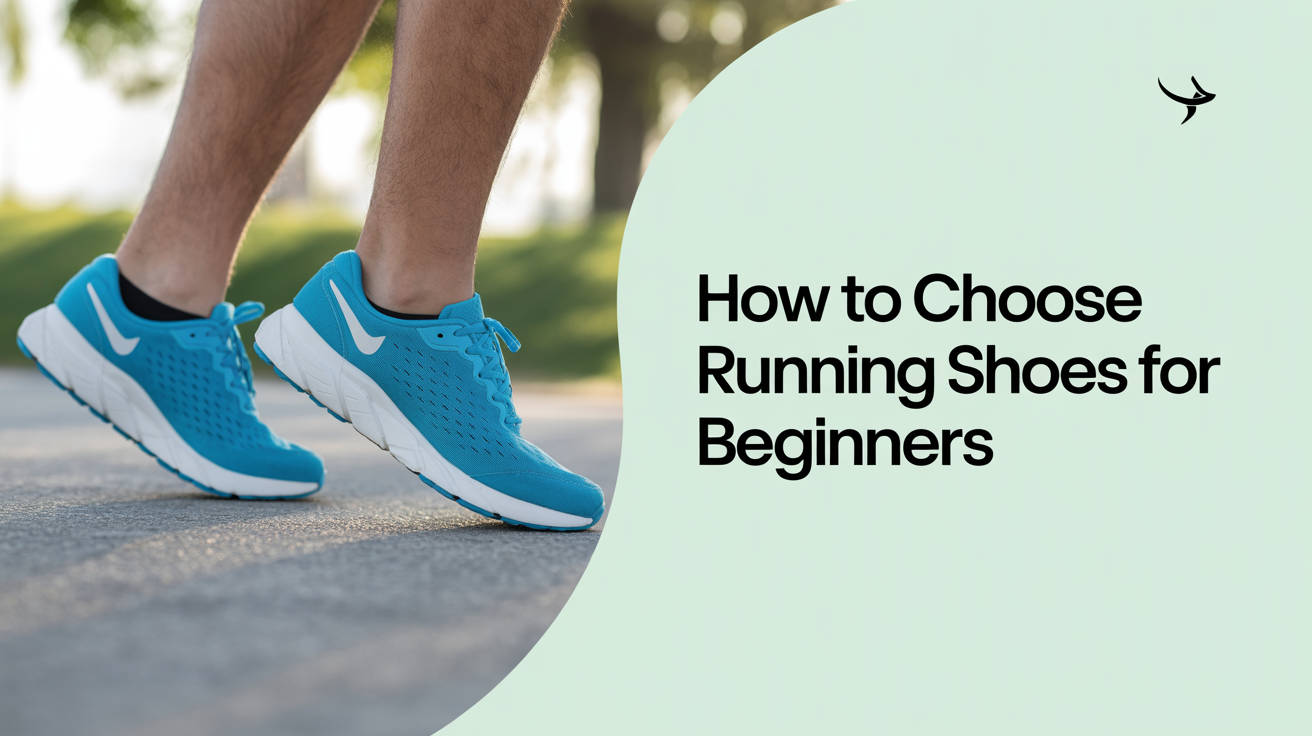
Shopping for your first pair of running shoes can feel weirdly overwhelming. There are walls of colorful options, intimidating jargon, and no shortage of people who will tell you that one specific shoe changed their life. Here is the truth: the best running shoe is the one that fits your foot well and feels good when you run. That's it. Price tag and brand reputation are secondary.
This guide cuts through the noise and gives you the practical information you need to walk out of a store (or close a browser tab) with a pair that will carry you through your first miles without causing problems.
Start at a Specialty Running Store
Before anything else, go to a local running store for a proper fitting. This is the single most useful thing a new runner can do, and it costs nothing beyond your time.
Running stores are different from big-box sporting goods chains. The staff are usually runners themselves, and most locations offer a quick gait analysis, which simply means they watch you walk or jog, sometimes on a treadmill, and observe how your feet land and move. They are not trying to diagnose you. They are just gathering information to help narrow down which shoe shapes and support levels might suit you.
Bring the socks you plan to run in. If you have custom orthotics or over-the-counter insoles, bring those too. The shape of what's inside the shoe matters for fit.
A good salesperson will bring out several pairs across different brands. Try them all, even if one looks ugly. Run up and down the store or on a treadmill if they have one. Your feet, not your eyes, should make the final call.
If foot pain, bunions, plantar fasciitis, or any chronic foot or ankle conditions are part of your picture, consider seeing a podiatrist before you buy. A shoe can only do so much, and a healthcare provider can catch fit issues that a store fitting will miss.
How Running Shoes Should Actually Fit
A lot of beginner runners buy shoes that are too small. It's a carry-over from dress shoes or sneakers, where you want a close fit. Running shoes follow different rules.
Toe room. You want roughly a thumb's width of space (about 1.3 cm or half an inch) between your longest toe and the end of the shoe. Your foot swells during a run, and if your toes are pressed against the front, you will end up with black toenails or blisters on longer efforts. This is why runners often size up a half size from their usual shoe size.
Heel hold. The heel cup should feel snug, not pinching, but not slipping. A heel that lifts with every step causes blisters and wastes energy. Lace the shoe fully before you judge this.
Width. Your foot should sit flat across the insole with no overhang on the sides. If the upper is squeezing the widest part of your foot, the shoe is too narrow. Many brands offer wide (2E) or extra-wide (4E) options that solve this without needing a bigger size.
No hot spots. Walk around the store for a few minutes. Any seam or fold pressing against your foot at rest will become a blister after two miles. Trust that feeling immediately.
One practical note: feet are often slightly different sizes from each other. Fit the larger foot.
Cushioning vs. Responsiveness
Running shoes exist on a spectrum from maximally cushioned to minimally cushioned, and both ends have passionate advocates. For beginners, the decision is simpler than the marketing makes it seem.
More cushioning absorbs impact and tends to feel forgiving on hard pavement. It works well for new runners whose legs and joints have not yet adapted to the repetitive stress of running. The tradeoff is that very thick-cushioned shoes can feel a bit mushy or slow your sense of ground feedback.
Less cushioning (sometimes called "responsive" or "performance" shoes) gives you more feel for the ground and a snappier return of energy. These are more common in racing and tempo shoes. For a beginner logging easy miles, they are not necessary.
The practical advice: if you are going out for 20 to 30 minutes a few times a week, a shoe with moderate to high cushioning will treat your legs well while they adapt. You can always try less cushion later, after your body has built some running-specific strength.
You do not need the most cushioned shoe on the market either. Beyond a certain point, extra foam adds weight without meaningful benefit.
Neutral vs. Stability: The Pronation Conversation
Walk into any running store and someone will mention pronation. It sounds technical, but the concept is simple. Pronation is just the inward roll of your foot as it lands and pushes off. It's a normal and necessary part of how feet absorb impact. The question is degree.
Overpronation means the foot rolls inward more than average. Supination (also called underpronation) means it rolls outward. Most people pronate somewhere in the middle.
Stability shoes have features built into the midsole, typically a denser foam or a guide rail system, that are designed to limit excessive inward roll. Neutral shoes have no corrective structure; the cushioning is more uniform throughout.
Here is where the "pronation myth" enters the picture. For many years, it was assumed that matching shoe type to pronation category would prevent injury. The research on this has become significantly murkier. Several well-designed studies have found that neutral shoes worn by mild overpronators do not lead to higher injury rates than stability shoes. Comfort may be a better predictor of injury prevention than biomechanical category.
The practical takeaway: if a gait analysis suggests a stability shoe and it feels good on your foot, wear it. If a neutral shoe feels better, that is meaningful data too. Do not force yourself into a shoe because a chart says your arch type requires it. Discomfort is a red flag regardless of category.
Related reading: Do you need expensive running shoes?
Understanding Drop (Heel-to-Toe Offset)
Drop, sometimes listed as "heel-to-toe drop" or "offset", is the height difference between the heel and forefoot of the shoe, measured in millimeters. A higher drop means the heel sits significantly higher than the toe; a zero-drop shoe is level throughout.
Traditional running shoes tend to have drops in the 8 to 12 mm range. This promotes landing on or near the heel, which is how most recreational runners naturally run.
Lower drop shoes (4 mm and under, including zero drop) encourage a more midfoot or forefoot strike. They also place more demand on the calf muscles and Achilles tendon.
For new runners, a standard 8 to 10 mm drop is usually the safest starting point. Transitioning to a lower drop too quickly is a common source of calf and Achilles problems. If you want to experiment with lower drop eventually, reduce the drop gradually over weeks, not days.
The number will be listed on the shoe's product page or box. It matters, but it should be one factor among several, not the deciding one.
Road Shoes vs. Trail Shoes
Road running shoes are designed for pavement, packed gravel paths, and treadmills. They prioritize cushioning, light weight, and a smooth or lightly textured outsole.
Trail running shoes are built for dirt, roots, rocks, and mud. They have aggressive lugs on the outsole for traction, a stiffer construction to protect against rocks underfoot, and sometimes a reinforced toe cap.
If you are starting out on sidewalks, paved paths, or a treadmill, buy road shoes. They are what the vast majority of beginner runners need. Trail shoes on pavement feel awkward, wear down faster, and do not offer any advantage.
If you are heading out onto unpaved trails regularly, a trail shoe is worth it. You can also own one of each if your runs vary, though it is not required when you are just getting started.
When to Ignore the Hype
Running shoe marketing is relentless, and social media makes it worse. A shoe that a popular running influencer loves may be a genuinely great shoe, or it may be a sponsored post. Some shoes carry premium prices because of technology and research; others carry premium prices because of branding.
A few grounding principles:
- A $150 shoe is not automatically better than a $110 shoe. Fit, feel, and appropriate features matter more than price.
- Last year's model at a discount is often the same shoe with minor cosmetic changes. Worth checking.
- Reviews from actual runners who are your size, weight, and experience level are more useful than aggregate star ratings.
- The shoe that worked for your running partner may not work for you. Feet are not interchangeable.
If you are curious about whether you need to spend a lot to run comfortably, here is a realistic breakdown of what you actually need to pay for.
What to Look For: A Quick Checklist
Green lights (good signs):
- Thumb's width of toe room with socks on
- Heel sits snug with no slipping
- No pinching across the widest part of the foot
- No seams pressing anywhere uncomfortable
- Feels stable when you jog in the store
- Appropriate for your surface (road vs. trail)
- Drop in the 8-10 mm range if you are new to running
Red flags (walk away):
- Toes touching the end of the shoe
- Heel lifts with each step
- Sides of the foot hanging over the insole
- Any hot spot or pressure point at rest
- Too heavy to feel comfortable after five minutes
- Price significantly higher than comparable models with no clear reason
When to Replace Your Shoes
Running shoes wear out from the inside out. The foam compresses over time, and a shoe that looks fine visually may no longer be providing the cushioning it once did.
A general guideline is to replace running shoes every 300 to 500 miles (roughly 480 to 800 km). If you are running 15 miles a week, that is roughly 5 to 7 months. If you are running less, you may get closer to a year out of a pair.
Watch for these signs that replacement is due: unusual soreness in your legs, hips, or knees after runs; visible compression lines in the midsole; or the outsole worn through to the white foam underneath.
For more on timing, see how often you should replace running shoes.
And once you have the shoes sorted, it is worth thinking about the rest of what you wear. A beginner's guide to running clothing covers the basics without the fuss.
Frequently Asked Questions
Do I really need to go to a running store, or can I just buy online?
A running store fitting is genuinely worth your time for your first pair. Once you know your size, preferred drop, and what level of cushioning works for you, buying subsequent pairs online is perfectly reasonable. But that first fit session gives you information you would otherwise be guessing at.
What if my feet are different sizes?
This is common. Always fit the larger foot and use an insole or thicker sock on the smaller side if needed. A good running store staff member will tell you the same thing.
Should I buy a shoe with arch support?
Most running shoes have some built-in arch support as part of their standard construction. You do not necessarily need to seek out a high-arch-support shoe unless a podiatrist has recommended it or you use custom orthotics. If you do use orthotics, remove the shoe's stock insole before inserting them.
Can wrong shoes cause injuries?
Ill-fitting shoes can contribute to problems like blisters, black toenails, shin splints, and knee pain. They are rarely the sole cause of a running injury, but they can make underlying issues worse. If you develop persistent foot or leg pain that does not resolve with rest, see a podiatrist or sports medicine physician rather than just buying new shoes and hoping for the best.
Is it okay to run in regular sneakers or cross-trainers while I figure this out?
For very short, easy efforts on soft surfaces, cross-trainers are not going to hurt you immediately. But they are built for lateral movement, not the forward heel-to-toe motion of running, so the cushioning and construction are in the wrong places. Getting a dedicated running shoe before you build any real weekly mileage is worth it.