Gear & Shoes
How Often Should You Replace Running Shoes?
Learn when to replace running shoes, how many miles they last, and the warning signs that yours are ready to retire.
Most running coaches will hand you a number early on: replace your shoes every 300 to 500 miles (roughly 480 to 800 km). It's a solid starting point, and it's probably saved a lot of knees over the years. But if you treat it as a hard deadline rather than a rough guide, you might swap out a perfectly good pair too early, or, more dangerously, keep shuffling along in shoes that quietly stopped protecting you weeks ago.
The truth is that mileage is just one piece of the picture. Your weight, your stride, the surfaces you run on, and even the shoe's construction all play a role. Here's how to think through all of it.
The Mileage Guideline: Where 300–500 Miles Comes From
Running shoes wear out from the inside out. The part that fails first isn't the outsole rubber you can see, it's the midsole foam you can't. That foam compresses with every footstrike and slowly loses its ability to spring back. When it's gone, it's gone.
For most runners, that foam reaches the end of its useful life somewhere between 300 and 500 miles (480 to 800 km). Lightweight trainers and racing shoes often land at the lower end. Thick, stability-oriented daily trainers sometimes make it past 500. A shoe's job is to absorb shock so your joints don't have to, and once the midsole gives out, that job falls to your legs.
If you're running three days a week for about 30 minutes each time, a completely reasonable beginner schedule, you're covering maybe 8 to 10 miles a week. At that pace, a pair of shoes might last you nine months to a year. Run more and they'll go faster. Run less and they'll outlast the calendar estimate.
Signs Your Shoes Are Worn Out
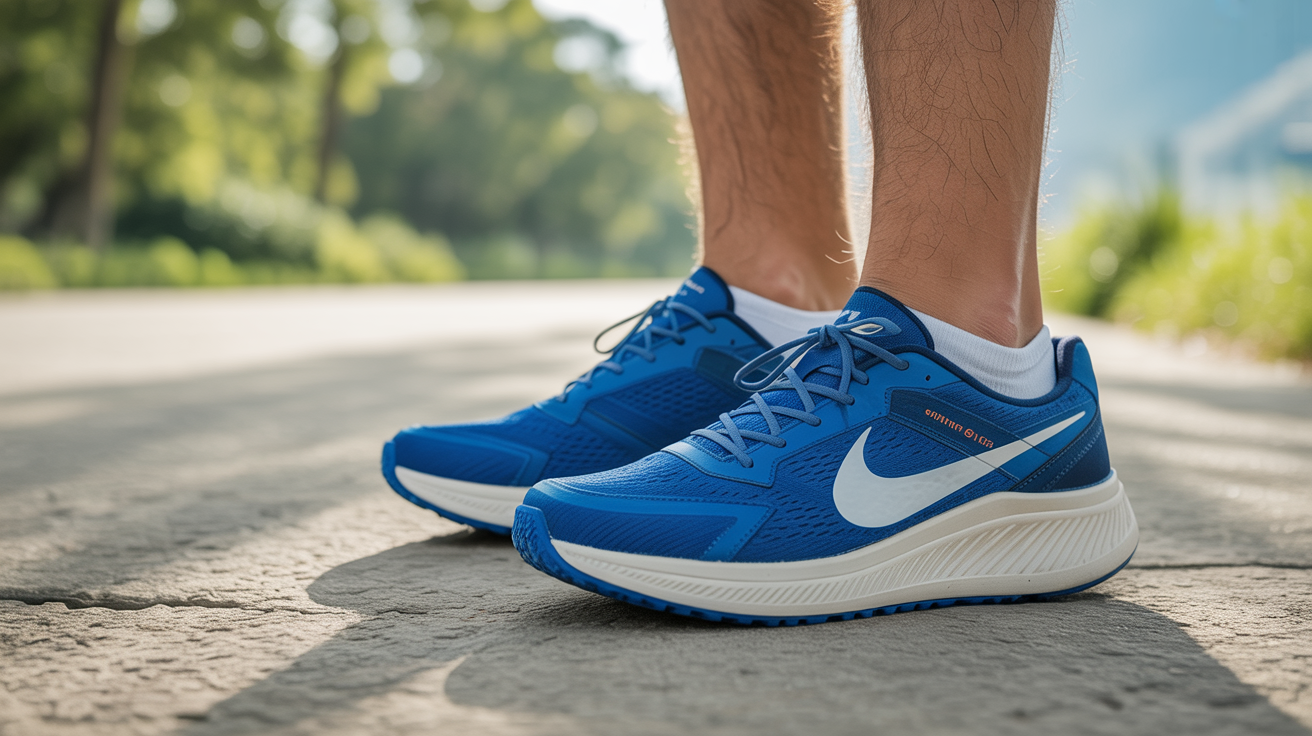
Mileage gives you a ballpark. Your body and your shoes will tell you when you've actually arrived. Watch for these:
- The midsole feels flat or hard. Press your thumb firmly into the foam on the side of the shoe. Fresh foam springs back quickly. Dead foam barely moves.
- Old aches are returning. If your knees, shins, or hips felt fine last month and are now nagging you again, your shoes may have lost the cushioning that was keeping things calm.
- The heel counter is collapsing. Squeeze the back of the shoe. If it folds easily and doesn't hold its shape, the structural support is gone.
- The shoe leans when you set it on a flat surface. Put both shoes on a table. If either tilts inward or outward, the midsole has compressed unevenly.
- The outsole tread is worn smooth. Some traction wear is normal. But if you can see through to the midsole layer in spots, or the tread pattern has completely disappeared under your heel or forefoot, it's time.
- New blisters in familiar places. Changes in how a shoe fits mid-run can signal that the upper has stretched and the last has shifted.
Quick "time to replace" checklist:
- Over 400 miles logged on this pair
- Midsole feels compressed or hard to the squeeze test
- Unexplained aches in knees, shins, or hips during or after runs
- Visible foam showing through the outsole
- Heel counter collapses when squeezed
- Shoe leans when set on a flat surface
- Persistent new blisters or hot spots
If you're checking off two or more of those, it's probably time, regardless of the mileage number.
For more on choosing the right shoe before you even get to this point, see our guide to how to choose running shoes for beginners.
What Affects How Long a Shoe Lasts
Not every runner gets the same mileage out of the same shoe. Several factors push the lifespan shorter or longer.
Body weight. A heavier runner compresses the foam more per step. If you weigh significantly more than the "average" the manufacturer tested around, budget toward the lower end of the range.
Running surface. Road running is harder on outsoles than treadmill running. Trail running grinds through outsole rubber faster but may spare the midsole somewhat, since softer ground absorbs some impact.
Gait and foot strike. Heavy heel strikers concentrate wear in one spot and often chew through heels faster. Runners who overpronate may wear the inner edge unevenly, compressing the foam asymmetrically.
Shoe type. Lightweight shoes and racing flats use less foam to begin with. They feel great but wear out faster, sometimes in as few as 200 miles. A plush daily trainer built for high mileage may last closer to 500.
How you use them. Wearing running shoes for everyday errands adds miles that don't get logged. Your shoes don't know the difference between a five-mile run and a five-mile day of walking around a theme park.
How to Track Your Shoe Mileage
The biggest mistake most beginners make is simply not tracking. It's easy to lose count, especially when you're just getting into a routine and not thinking of yourself as "a runner who logs things."
A few simple options:
- Strava or Garmin Connect. Both apps let you assign a pair of shoes to your gear profile. Every run you log gets added to that shoe's total automatically. Strava even sends you an alert when you approach a mileage threshold.
- A notes app or spreadsheet. Low-tech works fine. Log the date, the distance, and a note about which shoes you wore.
- Write the purchase date inside the tongue. Not mileage-precise, but if you know you run a consistent schedule, you can estimate.
The goal isn't obsessive precision. It's having a rough idea of where you are so you're not caught off guard when a shoe dies mid-training cycle.
If you're still figuring out what gear to track and what to skip, our what to wear running: a beginner's guide covers the essentials without overwhelming you.
The Case for Rotating Two Pairs
Here's something experienced runners swear by that beginners rarely do: rotate between two pairs.
When you run in a shoe, the foam compresses and needs time to decompress and dry out before the next run. Rotating gives each pair 48 hours of recovery between uses, which research suggests extends the life of the foam. The shoes literally last longer.
There's also a practical bonus: you always have a backup. If one pair gets soaked on a rainy run, you're not stuck waiting for it to dry. And transitioning gradually from an old pair to a new one, running in each on alternating days for a few weeks, lets your body adapt to the slight differences in cushioning and geometry without a jarring switch.
You don't need two pairs of premium shoes. One daily trainer and one lighter shoe works well. Even two of the same model at different stages of wear is a smart system.
Why Running on Dead Shoes Is a Genuine Injury Risk
This is worth taking seriously. Worn-out running shoes are a legitimate contributor to overuse injuries. When the midsole loses its cushioning, that energy has to go somewhere, and it often goes into your joints and soft tissue.
Common complaints that flare up around dead shoes include shin splints, plantar fasciitis, knee pain, and stress reactions in the foot. These don't always announce themselves loudly. Sometimes it starts as a minor achiness that you write off as a hard week of training. By the time it's obvious, you've been running through it for a while.
If you're experiencing new or returning aches that seem to line up with older shoes, it's worth swapping in a fresh pair before assuming the problem is something more serious. That said, persistent or worsening pain is always worth getting a second opinion on, a sports medicine doctor or a physical therapist can help you figure out whether it's footwear or something that needs direct attention.
For a deeper look at whether shoe price actually matters for injury prevention, see do you need expensive running shoes.
Frequently Asked Questions
Can I make my running shoes last longer?
To a degree. Rotating two pairs extends foam life. Wearing them only for running (not errands) reduces unnecessary compression. Letting them air out between runs helps the foam recover. But the foam will eventually break down no matter what, 300 to 500 miles is about as long as any pair realistically goes.
My shoes still look brand new. Do I still need to replace them?
Yes, if the mileage and feel match the warning signs. Running shoes wear out from the inside. The upper fabric and outsole rubber can look fine long after the midsole has stopped doing its job. The squeeze test and the lean test matter more than appearances.
Is there a rule of thumb for how often to replace shoes by time instead of miles?
If you're not tracking mileage, one year is a reasonable outer limit for someone running three to four days a week. Less active runners might get a bit more. But time alone isn't reliable, a runner logging 40 miles a week will need a new pair in three months, while someone running twice a week might stretch closer to 18 months.
Do trail shoes last the same amount of time as road shoes?
Trail shoes often wear through outsole rubber faster because of rocks and roots. But the softer ground can be easier on the midsole. In practice, many trail runners find their shoes fall in the same 300 to 500 mile range, sometimes on the higher end because the cushioning takes less of a beating from hard pavement.
What should I do with my old running shoes?
Retired running shoes make decent casual walking shoes for light errands. Several organizations collect used athletic shoes for donation. Nike's Reuse-A-Shoe program grinds them into sports surfaces. Just don't keep running in them, that's the one thing they're no longer suited for.