Getting Started
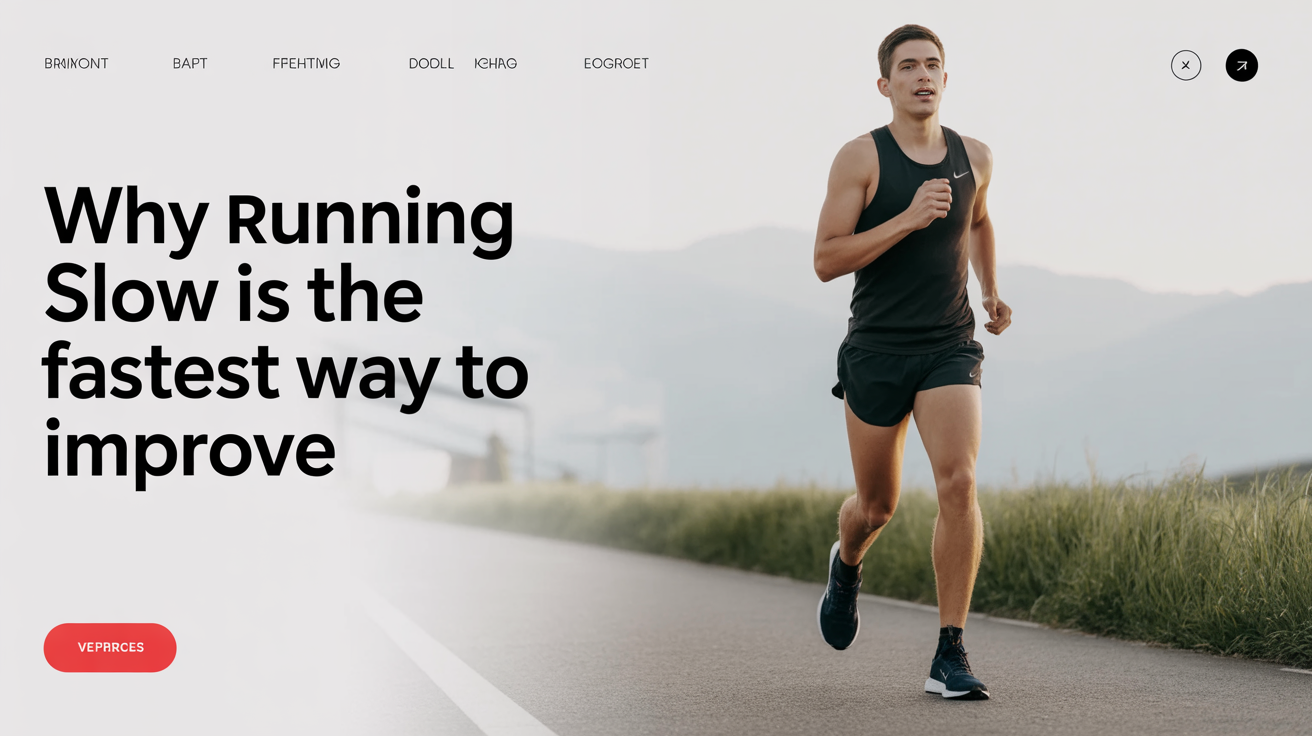
Why Running Slow Is the Fastest Way to Improve
Slowing down your runs builds the aerobic base that makes you faster. Here's the science and practical guide for beginner runners.
Every new runner hits the same wall. You lace up, head out, and push yourself because that's what exercise is supposed to feel like, right? A few weeks in, you're gassed after a quarter mile, your shins ache, and running feels like punishment. So you quit, or scale back, convinced you're just not built for this.
Here's the thing no one tells you at the start: you were probably running too fast.
This is the central idea behind The Slow Mile, and it sounds like a paradox. Slow down to get faster? Run at a pace that feels almost embarrassingly easy? Yes, and yes. The research backs it up, elite coaches swear by it, and thousands of beginner runners have transformed their fitness by doing exactly this. If you're new to running or struggling to make progress, the most powerful change you can make costs nothing and requires no gear. Just slow down.
This article is general information for healthy adults looking to start a running habit. If you've been sedentary, have a health condition, or are unsure whether running is right for you, check with your doctor first. Stop and rest if you experience chest pain, dizziness, or shortness of breath.
What Actually Happens Inside Your Body When You Run Easy
Running at a comfortable, conversational pace triggers a cascade of physical adaptations that hard running simply cannot. And those adaptations are what make you a stronger, faster, more durable runner over time.
Your heart gets stronger. At easy effort, your heart pumps a large, steady volume of blood. Over weeks of consistent easy running, the left ventricle literally grows larger, so each beat pushes more blood out. Cardiologists call this "athlete's heart," and it's the foundation of endurance.
Your muscle fibers grow new capillaries. These tiny blood vessels are the delivery network for oxygen. Easy running is the primary stimulus for capillary development. More capillaries mean more oxygen reaching your muscles during a run, which delays fatigue and helps you recover faster between efforts.
Your mitochondria multiply. These are the power plants inside every muscle cell, and they convert oxygen into usable energy. More mitochondria means a higher aerobic ceiling. Easy, aerobic running is the trigger that tells your body to build more of them.
Your body learns to burn fat. At low intensities, fat is your dominant fuel source. The more you train at easy paces, the better your muscles get at tapping into fat stores. This matters enormously for endurance, because even a lean runner carries tens of thousands of calories of fat. Teaching your body to access that fuel means you can run farther on less glycogen.
None of these adaptations require gasping or suffering. They build quietly at a pace where you could hold a conversation.
Why Most Beginners Run Too Hard (and Stall Out)
There's a deeply human reason beginners run too fast: going slow feels like cheating. If you're not struggling, you're not working, right?
This instinct is reinforced by how most people think about exercise. No pain, no gain. Push yourself. Sweat more. The fitness culture around us celebrates intensity. So beginners go out and run at what feels like an appropriately hard effort, which usually means they're sprinting at something close to their maximum aerobic capacity.
At that pace, your body is working anaerobically, burning through glycogen rapidly and flooding your muscles with metabolic byproducts. Your form breaks down. Recovery takes days. Injury risk climbs. And, critically, the long-term aerobic adaptations described above barely develop, because you're never spending enough time in the easy, oxygen-rich zone where they happen.
The result is a plateau. You keep running hard, you keep hurting, and your fitness doesn't build the way you expected. Many people give up right here and conclude they're just not runners.
They're not wrong that the approach wasn't working. They're just wrong about which approach to try next.
The 80/20 Rule, Simplified for Beginners
Sports scientists studying elite endurance athletes discovered something surprising: world-class runners spend roughly 80 percent of their training time at easy, low-intensity effort, and only 20 percent at moderate or hard paces. This pattern shows up across distance runners, cyclists, triathletes, and rowers.
The 80/20 principle isn't just for elites. It reflects something true about how aerobic systems develop, and beginners benefit from it even more than advanced athletes, because beginners have the most to gain from building a base.
For practical purposes, this means most of your runs should feel easy. Not every run. Not all the time. But most of them. If you're running three days a week, two of those runs should be at a pace where you feel comfortable, relaxed, and able to talk in full sentences. The third might include a slightly brisker effort, a short tempo segment, or simply a longer run at the same easy pace.
As a beginner, you don't need to stress about percentages. Just make sure the majority of your running feels manageable, not miserable. The hard efforts will come later, and they'll work a lot better once you have a solid aerobic base underneath them.
For more on building those first weeks of running, our complete beginner's guide to starting running walks through structure, expectations, and the mindset shift that makes it stick.
How to Know If You're Running Slow Enough
The talk test is the simplest and most reliable gauge you have. If you can speak in full sentences, you're in the right zone. If you can only get out a few words before gasping, you're running too hard.
More specifically: try saying something like "I'm out here running today and the weather is pretty nice" out loud. If that comes out naturally without straining, you're at easy pace. If it's a struggle, back off.
Some runners use heart rate monitors and target 60 to 70 percent of their maximum heart rate for easy efforts. A rough estimate of max heart rate is 220 minus your age. So a 35-year-old might aim for a heart rate between 111 and 129 beats per minute during easy runs. But heart rate monitors can be inaccurate, and the talk test works just as well for most beginners.
What surprises almost everyone when they first try this: easy pace is slower than you think. For many new runners, genuine easy pace feels almost like a brisk walk with some jogging mixed in. That's fine. It's not a failure of fitness; it's an accurate reading of where your aerobic base currently sits. The pace will rise on its own as the base builds.
If you're just getting started and easy running still feels rough, the run-walk method is a proven bridge that lets you accumulate time on your feet without overloading your system.
Slower Running Protects You from Injury and Burnout
Most running injuries in beginners aren't caused by bad shoes or bad luck. They're caused by doing too much, too fast, too soon. The connective tissue in your legs, tendons, ligaments, and bones, adapts to training stress more slowly than your cardiovascular system. Your lungs and heart might feel ready to run harder in a few weeks. Your Achilles tendon is still catching up.
Easy running puts significantly less mechanical stress on your body than hard running. Your foot strike is lighter, your ground contact time is longer, your muscles absorb force rather than fight it. When you run hard and fatigued, form breaks down and repetitive stress injuries follow.
Burnout works the same way. Hard running is taxing on your nervous system and your motivation. If every run feels like a battle, running stops being something you look forward to. Easy running is sustainable. You finish feeling like you could do a little more. That's not a sign the run was wasted; it's a sign you're building something that will last.
And for beginners who are completely out of shape and starting from scratch, easy effort isn't optional, it's the only safe starting point.
Speed Comes Later, and It Comes Fast
Here's the payoff: once you've built an aerobic base through months of easy running, your speed will improve in ways that feel almost effortless. Paces that used to leave you gasping become comfortable. Your easy pace gradually gets faster even though the effort stays the same. When you do introduce harder efforts, your body has the foundation to absorb them and adapt.
This is the actual path to running faster: build the engine first, then put your foot on the gas. Trying to go fast before the engine is built just wears out the parts.
Most beginners who stick with easy running for 8 to 12 weeks are genuinely surprised by their progress. Not because they pushed hard, but because they were consistent and patient, and their body responded exactly the way it's supposed to.
Slow down. Stay consistent. Let the adaptation happen. The pace will follow.
Frequently Asked Questions
Is walking during a run okay, or does it mean I'm not running slow enough?
Walking is absolutely fine, and it doesn't mean you failed at running slow. Run-walk intervals are a legitimate, evidence-backed training approach used by beginners and marathon runners alike. If your easy running pace still feels hard, mixing in walk breaks lets you stay in an aerobic range without overloading your system.
How long before I see results from running slow?
Most runners notice meaningful fitness improvements after 4 to 6 weeks of consistent easy running, and more dramatic changes after 8 to 12 weeks. The aerobic adaptations, better capillary density, stronger heart, improved fat burning, build gradually. Patience is part of the training.
Will I ever get to run fast if I only run slow?
Yes, and the base you're building now is what makes fast running sustainable later. Easy running is not the end goal; it's the foundation. Once your aerobic base is solid, adding faster intervals or tempo runs on top of it produces real speed gains. Trying to skip the base and go straight to speed workouts just leads to injury and frustration.
What if running slow feels boring?
This is genuinely common, and a few things help. Run with a podcast, audiobook, or music that you only allow yourself during runs. Find a scenic route. Run with a friend at a conversational pace. Many runners find that once they stop gasping and can actually look around, easy running becomes the part of the day they look forward to most.
Should I be concerned if my easy pace seems really slow compared to other runners?
No. Comparing your pace to other runners, especially online, is one of the fastest ways to derail your progress. Every runner's easy pace is personal and tied to their current fitness level. A pace that's easy for someone who has been running for two years will feel brutal for a beginner. Run your easy pace, not someone else's.