Form & Technique
How to Fix Overstriding and Shorten Your Running Stride
Learn how to fix overstriding with simple self-checks and cadence tweaks that shorten your stride, ease impact, and calm shin or knee soreness over time.
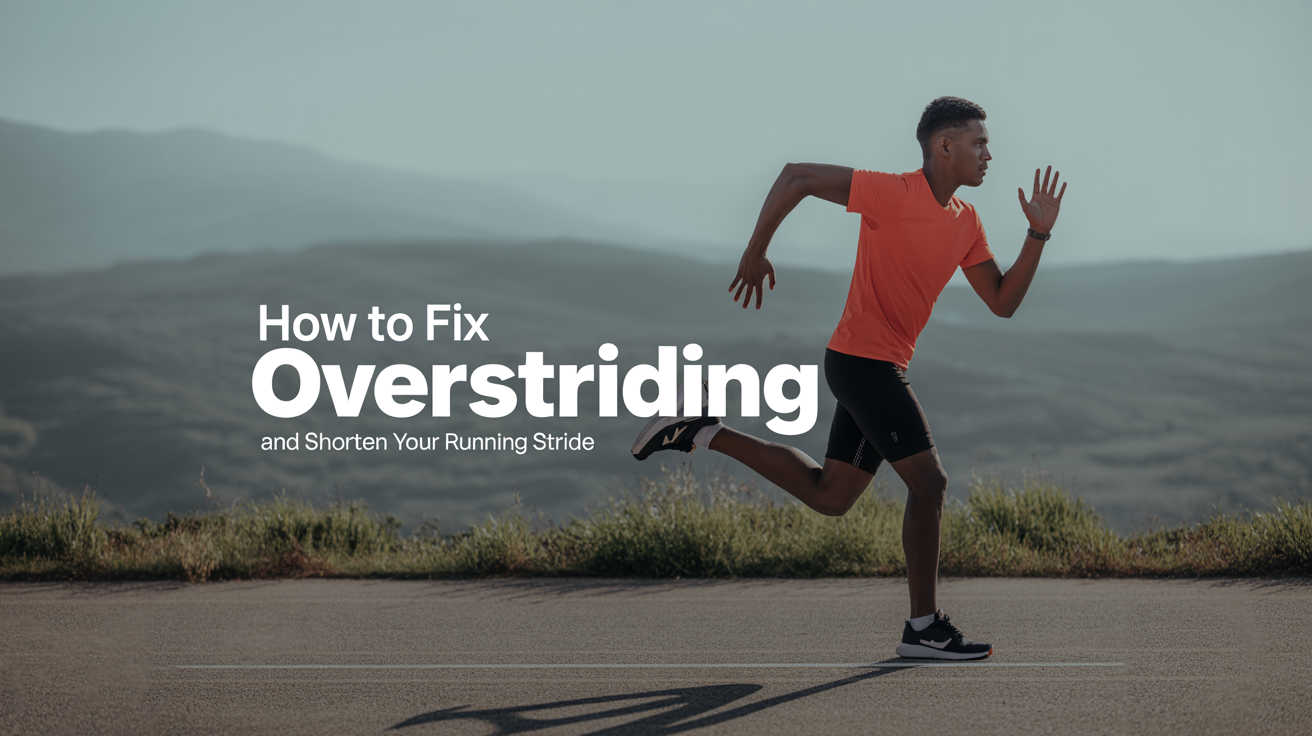
If someone mentioned overstriding after you complained about sore shins or a cranky knee, you're not imagining a connection. Learning how to fix overstriding is one of the more useful things a beginner runner can do, since this one habit quietly adds strain to nearly every step. The good news is that it's fixable, and you don't need a lab or a coach standing over you to start.
What Overstriding Actually Is
Overstriding means your foot lands too far out in front of your hips instead of landing close to underneath you. Picture your leg reaching forward like it's trying to grab extra ground before the rest of your body catches up. When that front foot hits the pavement, your lower leg is angled forward rather than mostly vertical, and your knee is often close to straight.
That landing position matters because it changes what your foot does when it meets the ground. Instead of your leg absorbing your momentum and rolling smoothly into the next step, your foot lands out ahead and acts like a small brake. You slow yourself down slightly with every single stride, then have to spend energy speeding back up. Do that thousands of times over a run and it adds up, both in wasted effort and in the jolt that travels up through your shin, knee, and sometimes your hip.
Most beginners don't overstride on purpose. It tends to creep in when you're trying to run "properly," which for a lot of people means taking big, confident-looking strides, or when you're tired and start reaching with your legs instead of moving your whole body forward.
How to Tell If You're Overstriding
You don't need fancy equipment to get a rough sense of whether this is happening to you. A few low-tech checks will tell you most of what you need to know.
The Sound Test
Run on a quiet sidewalk or a treadmill and listen to your feet. A loud, flat slapping sound, especially through the heel, is a common sign of overstriding. Easy, well-timed steps tend to sound like a soft patter rather than a stomp. It isn't a perfect test alone, but a heavy heel slap on nearly every step is worth noting.
The Shadow or Mirror Check
On a sunny afternoon, find a spot where your shadow falls to the side and glance down while running at an easy pace. Watch where your front foot lands relative to your hip. If it lands well out in front of your body, with your shin angled forward and your knee fairly straight, that's overstriding. A shadow video taken from the side with your phone propped on a bench works even better, since you can watch it back frame by frame instead of judging it in real time.
Other Clues
A few other patterns often travel with overstriding:
- You feel like you're "reaching" for each step rather than falling into it
- Your cadence, or steps per minute, feels noticeably slow
- Shin soreness or a nagging ache below the kneecap shows up after runs, especially with more downhill or faster pace
- You feel a strong heel strike rather than landing toward your midfoot
None of these on their own proves anything, but a runner who checks several boxes and is also dealing with recurring lower leg soreness has a decent case for overstriding being part of the picture. If you're still sorting out how your foot should land at all, it helps to first get a handle on foot strike and whether it actually matters before layering this fix on top.
Why Overstriding Is Worth Fixing
The braking effect is the core problem. Every time your foot lands ahead of your center of mass, the ground pushes back against you in a way that resists forward motion instead of supporting it. Your joints, mostly your knee and shin, end up absorbing more of that force than they would with a landing closer to your hips.
Over time, that repeated jolt is a plausible contributor to some of the aches that show up early in a running habit, including shin discomfort and soreness around the front of the knee. It's not the only cause of those issues, and other factors matter too, including how quickly you've increased your mileage and your shoes. But for a lot of beginners, softening the landing by shortening the stride removes one real source of unnecessary pounding.
There's also a simple efficiency angle. Braking with every step means spending energy slowing down and then speeding back up, over and over. Reduce that braking and the same distance can feel a little less draining, even before you get any fitter.
How to Fix Overstriding
None of these fixes require you to overhaul your form overnight, and trying to do that is more likely to create new problems than solve the old one. Small, gradual adjustments work better and are easier to stick with.
Nudge Your Cadence Up
Cadence is your step count per minute, counting both feet. A slightly quicker cadence is one of the most reliable ways to shorten your stride without consciously thinking about "where my foot lands" on every step, which is nearly impossible to manage in real time anyway.
You don't need to hit some specific magic number. A practical approach is to count your steps for a minute during an easy run to get your baseline, then aim for a cadence five to ten percent higher. If you land on 160 steps per minute, something closer to 170 to 175 is a reasonable first target. A metronome app or a playlist with a steady beat near your target cadence can help your legs find that rhythm without constant counting. For more on why this number matters, running cadence is worth a closer look.
Shorten and Quicken Your Steps
This is really the other side of the cadence coin. Instead of picturing "run faster" as taking bigger steps, picture it as taking quicker, smaller ones. Many beginners are surprised at how little their pace actually changes when they shorten their stride and pick up the turnover, because the two roughly balance out.
A helpful mental cue is to imagine running over a floor scattered with hot coals or a bed of eggs you don't want to crack. That image naturally makes people land lighter and quicker, with steps that fall closer under the body instead of reaching ahead of it.
Lean Very Slightly Forward From the Ankles
A small forward lean from the ankles, not from bending at the waist, shifts your weight in a way that naturally encourages your foot to land closer underneath your hips. Think of it as falling forward slightly and letting your legs catch you, rather than staying upright and reaching your legs out to cover ground.
Keep this lean subtle, like standing tall and tipping forward from the ground up, not hunching your shoulders or bending at your hips. Bending at the waist tends to create its own problems, including lower back tightness, so if the lean doesn't feel natural yet, it's fine to work on cadence and step length first and let it develop on its own.
Give the Fix Time to Work
Changing something as automatic as your stride is a gradual retraining process, not a one-run fix. Your body has practiced the current pattern for every run you've ever done, so expect the new cadence and shorter steps to feel a bit unnatural, even mechanical, for the first several runs.
Resist the urge to force the change on every single run right away. A common approach is to spend the first mile or two at your normal form, then switch your attention to cadence and shorter steps for a stretch, then let it go again. Over several weeks, the new pattern tends to become the default without you thinking about it constantly.
It's also worth changing gradually rather than all at once, because a sudden shift in cadence and stride length asks different muscles, especially your calves, to do more work than they're used to. Ramping up too fast can trade one type of strain for another. If you already deal with recurring soreness, pairing this stride work with a broader look at preventing running injuries as a beginner is a sensible next step. And if pain is sharp, doesn't ease with rest, or gets worse, that's a signal to see a doctor or physical therapist rather than run through it.
Frequently Asked Questions
How do I know if I'm overstriding without a video?
Listen for a loud heel slap, notice if your legs feel like they're reaching forward rather than falling into each step, and pay attention to whether shin or under-kneecap soreness shows up regularly after runs. These aren't a diagnosis on their own, but together they're a reasonable signal worth acting on.
Will fixing my stride slow me down?
Usually not by much, and often it doesn't change your pace at all. Shortening your stride while quickening your cadence tends to roughly balance out, and any small pace difference is outweighed by less braking and a lighter landing.
How long does it take to change a running stride?
Plan on several weeks of gradual practice rather than an overnight switch. Most beginners find the new cadence starts to feel automatic somewhere around three to six weeks of regular, easy-paced runs where they occasionally bring their attention back to it.
Can shoes fix overstriding on their own?
No single pair of shoes corrects a stride pattern by itself. Cadence and step length are things you control with how you run, though a well-fitted, comfortable shoe makes it easier to focus on form instead of foot discomfort.
Is overstriding the same as heel striking?
They often show up together but aren't identical. You can heel strike with your foot landing close under your hips, and overstriding is really about how far forward the foot lands relative to your body, regardless of which part touches down first.