Form & Technique
Heel Striking vs. Forefoot: Does Foot Strike Matter?
Heel striking vs forefoot running explained for beginners. Learn what foot strike really means, what the research says, and when it might matter.
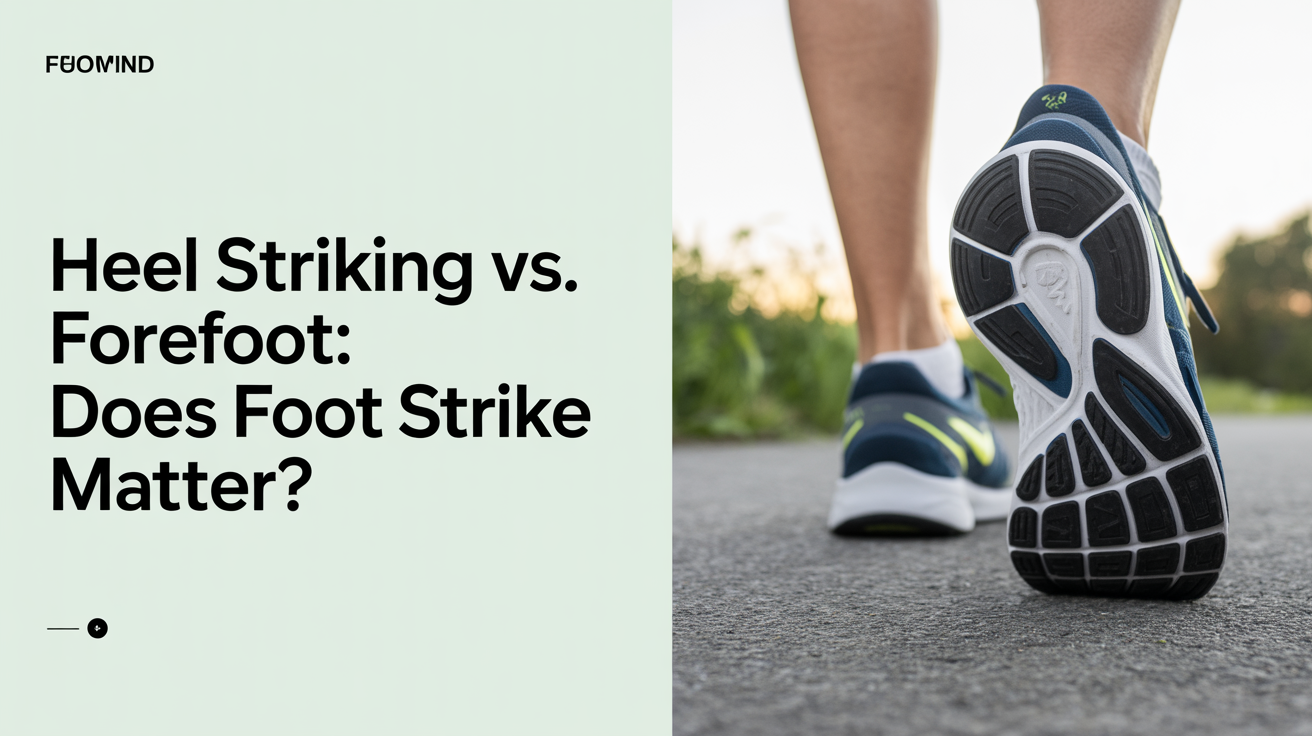
If you have spent any time in running forums or shoe stores, someone has probably told you that heel striking is the root of all running injuries, and that you need to switch to a forefoot or midfoot strike immediately. The reality is more nuanced, and for most beginners the obsession over foot strike is a distraction from the things that actually matter in your first months of running.
Here is a plain-language breakdown of what foot strike means, what the evidence actually shows, and what you should and should not worry about when you are just getting started.
What Is Foot Strike and Why Do People Care?
Foot strike refers to which part of your foot makes first contact with the ground when you run. There are three main patterns:
Heel strike: The back of your foot, the heel, touches down first. This is how the majority of recreational runners land, especially those in modern cushioned shoes.
Midfoot strike: Your heel and the ball of your foot land at roughly the same moment. Often described as the most "neutral" pattern.
Forefoot strike: The ball of your foot, near the toes, lands first, with your heel dropping down shortly after. Common among sprinters and some barefoot-running advocates.
The debate heated up in the mid-2000s when researchers and popular books began arguing that heel striking caused injuries by transmitting a sharp impact force up the leg, and that humans naturally ran on their forefeet before cushioned shoes came along. This led to a wave of minimalist shoes, barefoot running trends, and a lot of anxious beginners wondering if they were running "wrong."
What Does the Research Actually Say?
The short version: no single foot strike pattern has been shown to cause more injuries than another across the general running population.
Studies comparing heel strikers to forefoot strikers have found that both groups get injured. The injury types differ somewhat, but the total injury rates are roughly similar. A large 2013 study in the British Journal of Sports Medicine found no significant difference in injury rates between the two groups when other variables like mileage and training load were controlled.
What the research consistently points to as the bigger injury risk factors: doing too much too soon, not enough recovery time, and ramping up mileage faster than the body can adapt. The 10% rule is a common guideline (not a guarantee) suggesting you should not increase your weekly mileage by more than about 10% per week. Going from 8 km (5 miles) one week to 20 km (12 miles) the next is a much clearer injury risk than landing heel-first.
Running form overall matters, but it is the bigger picture, not which centimeter of your foot hits first. Overstriding, which is landing with your foot far out in front of your body, does produce a harder braking force regardless of whether you land on your heel or midfoot. A forefoot strike with a long overstriding gait is not safer than a heel strike with your foot landing under your hips. For more on how your whole body position fits together, see proper running form for beginners.
Is Heel Striking Bad?
For most beginners, no, heel striking is not bad in itself.
The runners who heel strike without problems vastly outnumber the ones who get hurt from it. Many elite marathon runners heel strike. People who have been running comfortably for years on a heel strike pattern should not feel pressured to change it.
That said, there is a version of heel striking that can cause problems: a hard, stiff-legged strike where your heel slams down well ahead of your body with a locked knee. This creates a sharp stopping force with every step. If you land with your foot too far out in front of you and your knee straight, your shin angle is steep, and more impact travels directly up your leg.
The fix here is not necessarily to switch to a forefoot strike. More often it is to shorten your stride slightly and let your foot land closer to underneath your body. Your knee should be slightly bent at contact. This small adjustment often happens naturally when you run at a comfortable, easy pace instead of overreaching with your legs to go faster.
Related to this: what is running cadence and does it matter covers how your steps per minute connect to stride length and landing mechanics. Increasing cadence slightly often improves landing position without you having to think consciously about your foot at all.
When Should a Beginner Think About Foot Strike?
Most of the time, you should not think about it at all.
Beginners have more pressing things to sort out first: getting your breathing under control, building a consistent run-walk routine, keeping your pace easy enough to hold a conversation. If you are panting and stopping every few minutes, working on foot strike is not the priority. See how to breathe while running for what to focus on early on.
There are situations where it might be worth paying attention:
You have persistent shin or knee pain. If your shins ache after every run, it could relate to overstriding and heavy heel impact. A physio or running coach can watch you run and tell you much more specifically what is happening than an article can. This is not medical advice, and before you self-diagnose a running injury, it is worth seeing a professional.
You are considering changing shoes dramatically. If you are thinking about switching from a heavily cushioned trainer to a minimal shoe or barefoot style, foot strike becomes relevant. Forefoot or midfoot striking is natural in minimal shoes because there is no heel elevation to encourage heel landing. But the transition needs to be extremely gradual. Switching to minimal footwear too fast is one of the fastest ways to develop calf and Achilles problems.
You are getting coaching or video analysis. A coach watching slow-motion footage of your gait can give you actionable feedback. Without that, trying to tinker with your foot strike based on feel alone is guesswork.
How to Improve Your Running Form Without Obsessing Over Foot Strike
Rather than fixing your foot strike directly, focus on the cues that tend to improve landing mechanics as a side effect:
Run at an easy, conversational pace. Running too fast causes overstriding naturally, as you try to grab more ground with each step. Slow down and your stride often shortens and lands more under your body.
Keep your posture upright with a slight forward lean from the ankles, not the waist. A slumped or backward lean pushes your foot out in front of you.
Avoid bouncing vertically. Energy spent going up and down is energy not going forward. Think about forward momentum, not lift.
Take shorter, quicker steps rather than long bounding strides. You do not need to count your cadence obsessively, but if your steps feel heavy and slow, quickening them slightly usually improves contact point.
Build gradually. Whether you are aiming for your first 5K or trying to run 30 minutes without stopping, the 10% mileage rule and run-walk on-ramps protect your legs while they adapt. A new runner doing 3 km (2 miles) three times a week has far less injury risk than one jumping to 8 km (5 miles) four times a week in month one.
If you have any health conditions, are pregnant, or have been inactive for a while, check with your doctor before starting a new running program. Stop and seek medical care if you feel chest pain, dizziness, or sharp joint pain at any point.
Frequently Asked Questions
Is heel striking always a problem? No. The majority of recreational runners heel strike without any issues. Heel striking only tends to cause problems when combined with heavy overstriding and a stiff, locked knee at landing. If your foot lands roughly under your hip and your knee is slightly bent, heel-first contact is generally fine.
Should I try to switch to a forefoot or midfoot strike? Not unless you have a specific reason to, such as persistent injury that your physio has linked to your landing pattern. Switching foot strike is a slow process, and doing it too fast is a common cause of calf strains and Achilles tendon problems. Most beginners are better off working on overall easy-pace running and letting their form settle naturally.
Can shoes affect foot strike? Yes. Heavily cushioned, elevated-heel shoes make heel striking easier and more comfortable. Minimal or low-drop shoes tend to shift runners toward midfoot or forefoot landing because the heel is not raised. Neither is automatically better. The right shoe is one that fits well, does not cause discomfort, and suits the running you are actually doing.
How do I know if I am overstriding? A rough sign: if your foot is landing well ahead of your knee when it makes contact, you are likely overstriding. Another sign is a slapping or thudding sound with each step. Slowing your pace and taking slightly quicker, shorter steps usually corrects this without you needing to think about your foot specifically.
Do elite runners land on their forefoot? Some do, particularly sprinters and faster mid-distance runners. But many elite marathon runners heel strike, especially in the later miles of a race. Elite runners at slower paces often land midfoot or heel-first. Foot strike at the elite level varies more than the forefoot-running advocates suggest.