Form & Technique
Treadmill vs. Outdoor Running for Beginners
Treadmill or outdoor running? Learn which is better for beginners, how each feels underfoot, and how to start safely with run-walk intervals.
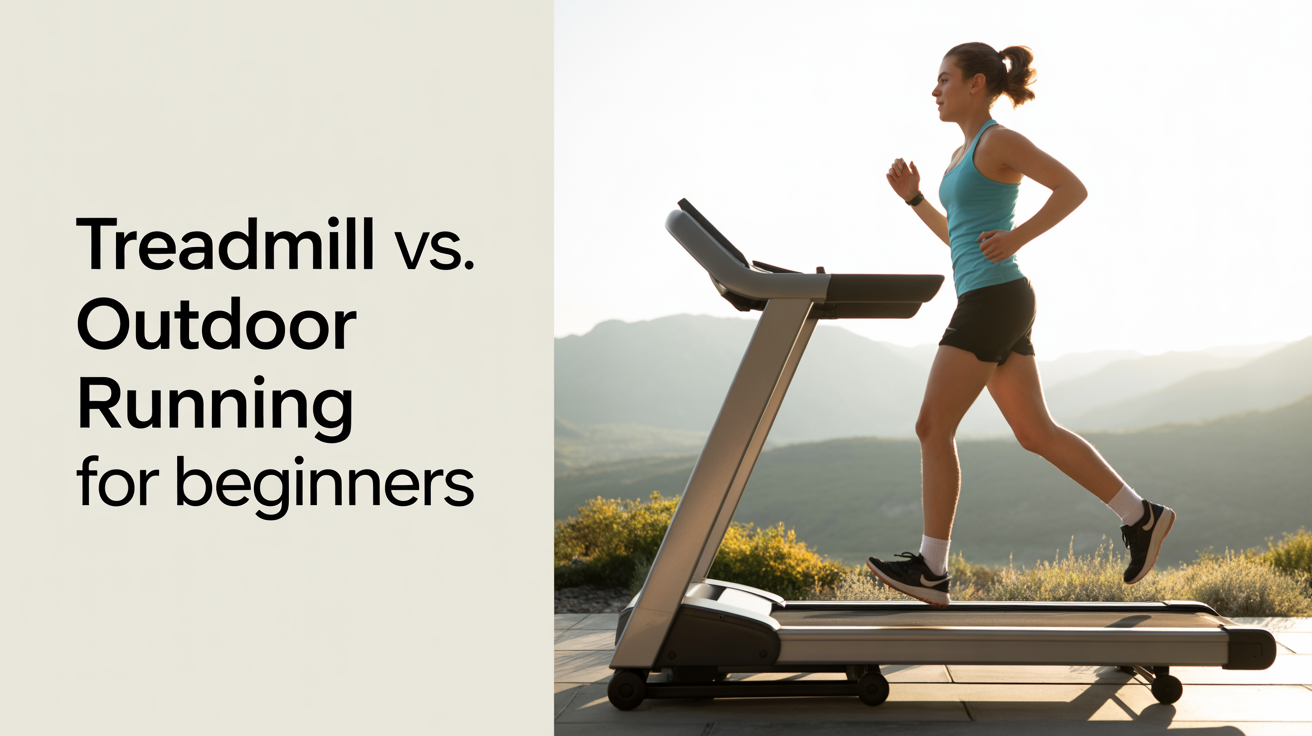
When you are just getting started with running, choosing where to run feels surprisingly loaded. The treadmill is right there at the gym, controlled and predictable. But outdoor running has wind, hills, and a finish line you can actually see. Neither is better in some absolute sense, and plenty of beginners do both within the same week. What matters is understanding the real differences so you can pick the option that keeps you moving consistently.
Before anything else: if you have a heart condition, joint injury, are pregnant, or have been inactive for a long time, check with your doctor before starting a running program. The advice below is general guidance. Stop running and seek care if you feel chest pain, dizziness, or sharp joint pain.
How Treadmill Running Actually Feels
The belt moves under your feet, which changes the mechanics in subtle but real ways. The moving surface does a small fraction of the work your hamstrings normally do to pull your foot back, so treadmill running often feels a little easier at the same pace. That is partly why "is treadmill running easier" is one of the most-searched questions beginners ask.
To offset this, many coaches suggest setting the treadmill incline to 1 percent. This small grade adds enough resistance to roughly match the energy cost of flat outdoor running. It is not mandatory, especially when you are first starting out, but it is a helpful habit to build.
The treadmill also removes wind resistance entirely. Outdoors, even a calm day adds a small drag that your body has to push through. Again, the difference is modest at beginner paces (around 5 to 6 mph / 8 to 10 km/h), but it adds up over longer runs.
What the treadmill does really well is control. You set the pace, and the belt holds you there. That makes it genuinely useful for learning what an easy, conversational pace feels like. If you can speak a full sentence without gasping, you are probably in the right zone. The treadmill removes the temptation to speed up downhill or slow to a crawl on an uphill, which means your effort stays steadier.
What Changes When You Head Outside
Outdoor running asks more of your legs, feet, and attention. The ground is not flat. Even a sidewalk has camber, small cracks, and curbs. Your ankles and hip stabilizers work harder to keep you balanced. That extra recruitment is actually good for long-term resilience, but it does mean you may feel more fatigue in your lower legs at first.
Terrain variety also means your body learns to adapt. A slight downhill teaches you how to control your stride. A gentle uphill builds strength that a treadmill at 0 percent incline never touches. Over weeks, this variability tends to translate into a more durable runner.
Weather is the obvious wildcard. Heat and humidity push your heart rate up even at easy paces. Cold air can irritate your airways until your lungs adapt. For many beginners these are just annoyances rather than dangers, but they are real factors to plan around. Starting runs when it is cool, carrying water on warm days, and wearing reflective gear in low light are all practical habits rather than optional extras.
One underappreciated upside of outdoor running is that you cannot accidentally stop the belt. The road keeps going, which can make it easier to stay mentally committed to finishing a run-walk interval. The mental side of running is real, and the environment you enjoy more is the one you will actually lace up for.
Running Form Differences to Know
Your running form shifts slightly between surfaces. On a treadmill, there is a tendency to shorten your stride and stay more upright because the belt is pulling backward. Outdoors, you propel yourself forward, which naturally engages your glutes and hamstrings more through each stride cycle.
Neither pattern is wrong, but if you train exclusively on a treadmill and then sign up for a road race, give yourself a few weeks to adapt your legs to outdoor conditions before race day. The same goes in reverse: if you have only run outside in winter and then switch to a treadmill, the controlled surface will feel strange at first.
Breathing patterns also matter more than most beginners expect. The steadier pace of a treadmill can help you practice rhythmic breathing without the distraction of navigating traffic or uneven ground. Once you have a breathing rhythm that feels natural, it transfers outdoors with very little adjustment. A guide on how to breathe while running covers the mechanics in detail if you want to go deeper.
Building Your First Weeks: The Run-Walk Method
Whether you are on a treadmill or a trail, the same principle applies: start slower than you think you need to, and build up gradually. Beginners consistently overestimate what their cardiovascular system can sustain in the first weeks and underestimate how much their joints need time to adapt.
A simple starting structure for treadmill running for beginners:
- Week 1: Alternate 1 minute of easy running with 2 minutes of walking, for 20 to 25 minutes total.
- Week 2: Move to 2 minutes running, 2 minutes walking.
- Week 3: Try 3 minutes running, 1 minute walking.
- Week 4: Aim for longer running blocks of 5 minutes with 1 minute walking breaks.
You do not need to follow this exactly. If week two feels too hard, stay on the week one pattern for another session or two. There is no prize for rushing.
The 10 percent rule is worth knowing: avoid increasing your total weekly distance by more than 10 percent from one week to the next. If you run 5 km (about 3 miles) in your first week, keep week two at or under 5.5 km (3.3 miles). This gives your tendons, ligaments, and bones time to catch up with your improving fitness.
Cadence, or the number of steps you take per minute, is one of those numbers beginners sometimes obsess over before it matters much. The short answer is: a slightly quicker, lighter step tends to reduce impact stress. If you want to understand more, what is running cadence and does it matter breaks it down without the jargon.
Which One Should You Start With
There is no single right answer, but here is a practical way to think about it:
Choose the treadmill first if the weather is extreme, if you feel safer having a handle nearby, if you want to practice a consistent pace without distractions, or if outdoor routes near you have heavy traffic and no sidewalks.
Choose outdoor running first if being inside feels tedious after five minutes, if you find it easier to stay motivated with scenery, or if a local park or trail is convenient and safe.
Many beginners find that using both works well. A few treadmill sessions per week for controlled effort practice, plus a weekend outdoor run for variety and terrain exposure, gives you the benefits of each. Your legs adapt to both surfaces, and you never feel completely stuck if the weather turns.
The most important variable is showing up. A run you actually do beats the theoretically perfect run you skip.
Frequently Asked Questions
Is treadmill running easier than outdoor running?
At the same displayed speed, a treadmill is slightly easier because the moving belt assists your leg swing and there is no wind resistance. Setting the incline to 1 percent roughly evens things out. At easy beginner paces the difference is small, so do not let it stop you from using whichever option gets you moving.
Can I train for a road race entirely on a treadmill?
Yes, but build in some outdoor runs in the final four to six weeks before race day. Your feet and ankles need time to adapt to pavement, camber, and uneven terrain. Even two or three outdoor runs per week in the final stretch will make race day feel much more familiar.
How fast should I run as a beginner?
Focus on effort rather than speed. Easy running means you can speak a complete sentence without stopping to catch a breath. In terms of pace, many beginners start around 5 to 6 mph (8 to 10 km/h) on a treadmill, but slower is completely fine. Build the habit first, and the speed will come on its own.
What surface is easier on my knees?
Softer surfaces, such as packed dirt trails or grass, reduce impact compared to concrete. Treadmill belts have some cushioning that asphalt and concrete do not. That said, footwear, running form, and total mileage matter more than surface. Warming up, not increasing distance too quickly, and listening to your body are the most reliable ways to protect your knees.
How do I know when to rest instead of run?
General muscle tiredness after a hard session is normal. Sharp or localised pain in a joint, pain that gets worse as you run rather than better, or pain that is still there the next morning are all signals to take an extra rest day and reassess. When in doubt, rest. Missing one run costs far less than pushing through an injury that sidelines you for weeks.